Showing posts with label The Country. Show all posts

Thursday, June 7, 2018

The Wildlife about Us

We saw a fox this morning, golden-brown, a long tail bushy at the end,  loping along through the low green wheat, bound who-knows-where.

There are many wild boar. They aren’t easy to see, as they hide in the hills during the day and come out mostly at night, but they are there. You can see the fresh marks every morning where they have been digging up the fields looking for roots and worms. They add a certain rugged glamour to the place, but they also do a lot of damage in large numbers and so the season has just been opened on them. Hunting wild boar in the mountains involves sitting up for hours at night at specific spots where you know they come through, without moving, smoking or making noise, until, if you’re lucky, you might get one shot. Miss, and that’s that. It’s a solitary, apparently dreary business, like fishing, I suppose, suitable for misanthropes and poets.

There are great bustards about. They are, I believe, the biggest of all flying birds, and we get a lot of them here in the summer. A couple flew languidly, with surprising elegance, across my path yesterday. When you come upon a group in a field, suddenly, close by, as when you come out of trees or over a rise, and they turn to look before deciding whether to take flight or just to walk away disdainfully as though they were going to anyway, they are startlingly big. For a moment you think you’ve scattered a herd of ostrich.

A lot of lizards about, too. The green and blue ones, very bright, sparkling colours, about a foot long, sometimes more, regularly cross the paths in front of you. We have two living in a crevice under a broken stone jar adorning a parterre just outside our door. They take the sun near us as we read or write (or paint, in the case of Mrs Hickory) in the garden, and sometimes gaze at us quizzically, wondering of we’ll drop any more bits of cured meat.

There are many crows at the end of the driveway, why just there I’m not sure, but they fly away as you approach and return when you go. There’s probably a reason for that which would spoil the tenor of the tale, so let’s just assume they like meeting there. Such a group is called a parliament, after all.

And the eagles, lazily circling above, pinging out a regular cry. And the smaller hawks, always flying about, looking for food on the wing. And the little owls that nest up on the roof and sing from the chimney pots every evening.

Tuesday, June 5, 2018

The Beauty of Water

I mentioned in passing that the lakes are full and the animals fairly chipper. It occurs to me that I should now expand on those remarks, as they are things which mark very vividly the character of the area, and so greatly affect the ascetic enjoyment of those of us lucky enough to be idle in the midst of it.

The lakes come and go over an irregular cycle lasting some years, as they are fed by an underground aquifer that collects water mainly from the mountains well to the east. When it doesn’t rain there for some time, and it doesn’t rain much in this part of the world, the lakes begin to dry up. Some of them disappear completely, others shrink to a pool or a channel near the middle, and huge expanses of dried mud, which people use as beaches, and the many feet of karstic formations are completely revealed. This is interesting but not attractive, and it means the usual bathing areas become unusable, and the people whose livelihood depends on selling beer to the tourists begin to contemplate the sacrifice of their first born.

Then it rains, and it all begins to change. This spring it has rained a lot, on and on it went, week after week. We love rain here, because it’s an agricultural region (wheat, barley, olives, grapes mostly) and the ground can become barren very quickly without it, and even drinking water can get scarce at times, but there’s only so much rejoicing you can do when you’re beginning to wonder why you bothered leaving England.

Anyhow, it rained a lot this spring (we don’t usually have spring as such, it just shifts from winter to summer over the course of a few days), and when we arrived here, expecting to see some improvement on last year, we found flowing waterfalls, brimming lakes teeming with fish, crystalline currents rushing, turning into crashing white-foamed arcs digging out holes in other great swirling pools. All bathed in bright sunlight (until the evening when storms arrive) and full of people, of course. I ask again the eternal tourist's question, ‘Do other people have to enjoy this, too?’

The land is green. There is a short period of the year, that very short spring, when the land is green, not quite the bright green of northern Europe, or even northern Spain, the green of places that have a lot of rain, and vegetation that can make the most of that rain, but definitely green. Spotted, in places carpeted, with red poppies, blue rosemary, purple lavender, and yellow things of various kinds. It’s as varied and as colourful as it ever gets here, and you learn to enjoy it until it all goes dry and brown again in a few weeks.

Thursday, August 8, 2013

Otis tarda

It could be the name of death metal band (perhaps it is), but I'm referring here to the great bustard, a large bird which has traditionally nested in the south of Spain, and over the last few years is back in increasing numbers. As I cover a lot of ground on my travels, I have seen a few of them this year. They seem to like some of the farmland near the lakes. They nest on the ground, and they congregate near the centres of large fields (fields are large here because the land is poor and you need a lot of it to grow a worthwhile crop). They avoid the paths where people and vehicles might go. I don’t imagine they can conceive the purpose of paths, of course, but by constantly moving away from any people they do see, they will end up with a preference for a spot in the centre, where they will only be bothered at ploughing, sowing and harvest time (or by the occasional lost wanderer who, having given up hope of finding a path that actually goes somewhere near his goal, and wondering vaguely whether he will be missed at lunchtime, or they’ll have kept his beer on ice, decides to walk straight across on the off-chance that on the other side of the field there is something that is of use to him). There are rather beautiful birds. Light earth brown on the wings, bordered and finished below in white, they look at first sight a little like emus. They vary greatly in size. Some are like turkeys, but I came across a small group the other day that were around four feet tall. They were only 50 yards when they too flight, and for a moment when I saw them I genuinely couldn’t work out what they were, so impressive was there size. They fly little, but with an elegant, efficient grace which is a pleasure to watch. They are, it is said, the biggest flying things on Earth, and yet they have none of the clumsiness of many ground-nesting birds (watching a partridge fly you wonder if the chap in the workshop in Switzerland who put it together had lunched rather too well). Whole families stay together until the chicks are hard to tell apart from the adults, so you might suddenly see a dozen of them rise from the corn in front of you are argue briefly about the best direction to take before splitting up and reuniting somewhere beyond the next copse. It is a remarkable sight to see them fly, and they give a different scale to the skies. They make the eagle owls look small and clumsy.

Friday, August 2, 2013

At Orëbro

Mrs Hickory came across this area by chance when she was looking for somewhere we could go walking well away from Stockholm. There is a large and beautiful system of lakes nearby, a lot of people have wooden cabins there for holidays, and so we went for a couple of days to walk around. Cue photographs of water and birds.

The river runs through the centre of what is only a small town, really, and it divided and rejoins itself again to form a small island called Large Island. It’s a matter of perspective, I suppose. The island and the neighbouring banks are a park, a very green and pleasant one full of unnecessary bridges and playgrounds and peculiar objects that were part of an art exhibition. There is a castle on another little island next to it and this was the view we had from our hotel room, which was across the river. It’s a conference centre now and inside it looks like one, but it has an impressive presence from without. A marauding band of brigands or disgruntled thane of lands to the North would think twice about trying to take Orëbro.


And bicycles. There are a bicycles everywhere. Huge numbers of bicycles. Just as in the other cities we saw, but in such a small place the quantities are exaggeratedly large. Everywhere there are people riding bikes, but also there are banks and hoards and rows and columns of bikes parked by the dozen or the hundred on almost every corner and every widening of every street, in racks intended for the purpose. The bikes are old-fashioned and in most cases just old, with high wide handlebars, the people are not dressed for cycling, they often look as though they are doing it for transport, not pleasure, and despite the numbers on the streets, many of the parked bikes have clearly not been moved for months or years.

Saturday, July 20, 2013

Of Sweden, Water and Elk

Work has continued to follow me around this week, but it seems to have stopped (I’ll say it very quietly), and I have time to do things, including blogging.

We are now in the country, by the lakes, but we spent ten days in England, in the old home town, and before that a few days in Sweden (for no particular reason, we just thought we’d go and see the place).

It’s a beautiful country, green and wet. When you live in the semi-desert of southern Spain that’s the first thing that strikes you about anywhere that has water. You breathe more deeply, your flesh seems to fill with life, you feel a freshness about everything, and as I hadn’t been there before and had no particular expectations, I could see it with fresh eyes as well.

Stockholm is built on somewhere between 1,000 and 30,000 islands, depending on who you ask. The casual visitor only sees a couple of dozen, but you are constantly reminded that it is city built on waterways. Everywhere you go is on sth-holm, and across sth-bron. In the tourist’s part of the city you are nearly always looking out over water, walking beside water, crossing over water, smelling water. You get the idea.

There are, of course, boats everywhere.

At the weekend, at the port at Kungsholm and along by Scheppsholm there was some kind of boating festival going on. It looked like a big one, with people from all over and major sponsors. There were many yachts being prepared for a race around the islands. There was talk of an inshore and an offshore race, and smaller, motorized craft were being prepared too. There was a Red Bull 'build a silly machine and throw yourself into the water' competition, which unfortunately didn't start until the next day, but everything was ready and some of the machines were already there. A bit odd they were, not surprisingly. There were outdoor bars and sponsors’ tents and announcers and the whole weekend looked like a lot of fun.

We saw the hat shop where Greta Garbo used to work, we walked up a steep hill and out over a narrow metal bridge about 150 feet up that didn’t seem to be standing on anything so we could see the whole of the old city below us across the water, set in its context against the waterways and the other nearby islands.

We went on an evening ‘safari’, a looking-at-the-wildlife safari, rather than an is-this-lunch-or-do-I-hang-it-on-the-wall safari. A girl with a minibus drove us around a nature reserve to the west of city, mostly around a lake and through woods, and stopped whenever we saw anything with the right number of legs. The first thing we saw was an elk with a young baby, about 70 yards from where we were standing. This, we were told, is very unusual, (she probably tells everyone that). We saw quite a few more elk, including another young one, some from about 40 yards. They have no predators and hunting is banned in the reserve so they don’t worry about anything much beyond the quality of the grass they are munching. At one point the mother and child walked up just behind a hut we were standing the other side of. We all tried to rush round the side and had to be restrained by the young lady who pointed out that an elk is a big thing to have on the other side of you from its baby.

We also came across a number of wild boar- which there are a lot of where I live, too, though you don’t see them often unless you go out at night or very early in the morning- roe deer, a dancing, nervous creature that never seems to like being where it is, and a couple of badgers. Although the area I grew up in is supposed to be full of them, I don’t think I have ever seen a badger before.

All of this as the sun went down over the lake.

Sunday, July 14, 2013

Swans and Summer

It's been a bit quiet here lately. Firstly I was very busy, then I was on holiday. Now I am on the farm for the summer, with time to share my ramblings, musings, rantings and occasional incisive and aethetically interesting thoughts with this blog and any reader who happens by.
I have ideas. Oh, yes. I have ideas. There will be stuff here. I hope it will be worth reading.

I would write about the Test match we have just won, but my pulse has not slowed sufficiently to think clearly about the game. Meanwhile, I offer you a cygnet and its mother on the river in my old home town, whence I came a day or two ago. I always carry the camera, and sometimes I surprise myself.

Tuesday, June 11, 2013

Water

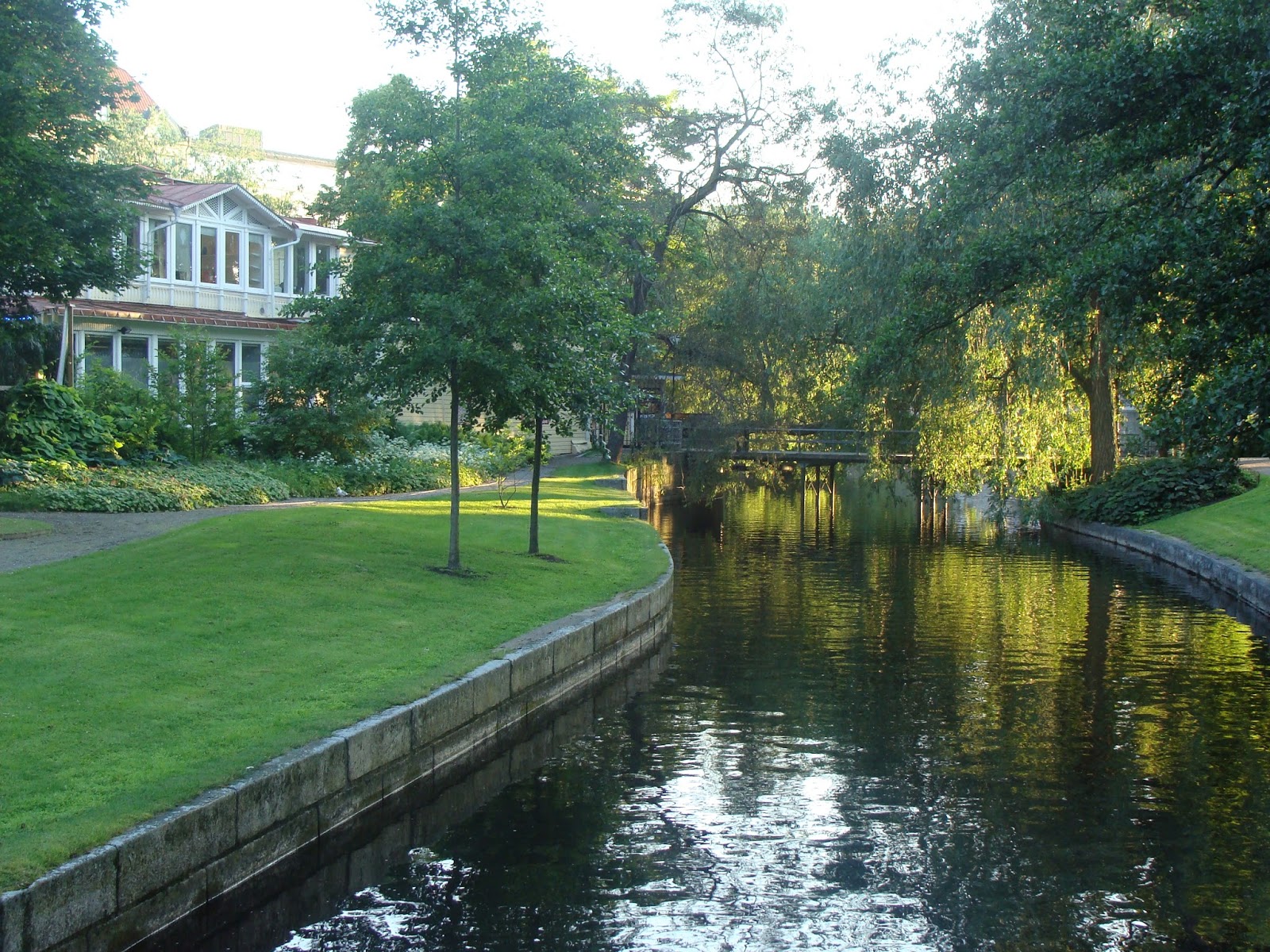
 We have been at our little country hideaway for a long weekend. It's been a very wet winter and spring and when it rains a lot in the mountains the water table rises, the lakes fill to the brim and where one becomes another the jumps between them are now looking like this. The bike and I have seen a lot of tracks and a lot of water this weekend, and it's been very pleasant.


Tuesday, April 30, 2013

(Very Nearly) Red in Tooth and Claw


There was beauty visible on the hill, and ugliness and strangeness and majesty, and life and colour and darkness, and terror. The valley was beautiful, the trees and the flowers were beautiful, the towering slopes in the distance were beautiful, the city that lay on their foothills was majestic, the factory below it was ugly, the sky was both light and dark, the birds and the insects made aesthetically neutral noises, and the barking of the dogs was terrifying.

Anywhere in the world, any place and any time, is like that, a mix, a mess of stimuli, of responses, of emotions, of sensations, of colours and shapes impossible to resolve beyond a certain level of detail, leaving a confused sense of peace or discomfort or depression, of uplift depending on the dominant tones. If there is a discernible beauty you may count yourself lucky, otherwise you try going somewhere else.

The barking of the dogs was terrifying because it was getting closer and there was still no sign of them. In a few seconds they would appear from over a ridge or behind a tree or a rock and only then would we know what their intentions were and which direction to run in and how long we had to do it. They appeared. There were two of them.

They were long and rangy, light-haired and damp-toothed. Their eyes were not evil, just business-like. They had a job to do, keeping the country free of creatures that smelt as though they didn’t belong. But their business involved fear, and possibly blood.

We kept walking. It would probably have been worse to run. We kept calm and a casual rhythm. They smell fear, it is said, so we tried to control our pheromones, tuning them to essence of confident mastery. The kind of thing you learn in primary school.

We wondered idly- we had nothing else to do, after all- whether they would remain a couple of feet behind us barking until we were far enough from their territory for them to relax a little, or would speed our departure in the primitive fashion of their kind. It was a question of some importance for a few seconds. When you’re 6’2”, you wish the dog behind you wasn’t exactly 3’1”.

I wish we’d been bitten. It would have made a better story. It would have had an ending. But the truth is that after 50 yards or so the dogs fell back, and their barking faded to the distant warning it had been when we first heard them. It was at that moment that a group of roe deer crossed the path twenty feet ahead of us, moving smoothly and silently as though projected on the forest background. The beauty had returned.

Saturday, September 15, 2012

On Hydronyms


The river that flows through the village is called the Alarconcillo. The river we went to to look at the salt mines a few days ago is the Pinilla. They both play a role in feeding the lakes and their two lines join up near the start. A couple of weeks ago I went to a village further south, on the river Cañamares. There is a stream that flows into the lower lakes, called the Magdalena, one of many that appear on the maps in the innumerable little valleys that the crumpled scenery here creates. This one is particular well known because it gives it name to a stretch on hill on the road to somewhere else where a lot of motorcyclists have met an unhappy end. It tempts you to go faster than the curves will allow.

All of this makes for a verdant-sounding countryside filled with the chatter of babbling brooks and the mating calls of happy and abundant fish. But all these rivers are dry. None of them deserves the name of river at all, as they are little more than mud channels baked in the sun. On the occasions when they do have water in them, it is a kind of sludge so narrow you can jump across it.


The city I live in is on the Guadiana, which at least is a proper river you can get wet in. It flows north-east, through Mérida and Badajoz, then goes south, forming the border between Spain and Portugal for about 70 miles and flowing into the Atlantic at Ayamonte. The name is Arabic and it somehow manages to keep its identity for several hundred miles, despite joining with many other rivers and passing through complex multi-feed drainage systems.

You would expect most people to call the river that waters their town or village ‘The River’. Why would you need a name for it at all? ‘And even if you did, to distinguish it from some other river that passed nearby, perhaps, why would the people in the village a few miles downstream give it the same name? There comes a point where the distance is so great, and it needn’t be more than a dozen or so miles, that it is not even recognised as the same river.

People identify their local river with some divinity, or event, or specific feature that characterises it, because they like giving an identity to the important things in their lives. Geographers give themselves the task of tracing rivers, then they need to define criteria for choosing names and deciding which has precedence, so the idea that a river has an identity over hundreds of miles is an invention of modern academia.

A neat explanation, if I do say so myself, but unfortunately it isn’t true. Hydronyms, and to a certain extent toponyms more generally, are extraordinarily durable. They are handed down from tribe to tribe, from conquered to conquerors, from those who left to go West to those who moved in to replace them. Most of the place and river names of Greece are not Greek. They have survived not only three thousand years of Greek culture, the Turkish conquest/semi-replacement of the 17thC, but they even survived the original occupation of the land we know as Greece by those who came from the East and displaced those who gave them those names.

There are countless river names in Spain that are Arabic, Visigothic or Celtic in origin. Why do people who share no language or cultural identity with the namers, nor any real cultural continuity, continue to use names that mean nothing to them?

Names are sounds. The meaning of the sounds is less important than the symbolism of the thing we attach them to. I am certain there is a great deal of information about human history in the human mind contained in the way we preserve and re-interpret names that have become meaningless, but try as I might, I can't find it.

Thursday, August 2, 2012

On the Bathing of Mules


There is a place on the lakes, at the end of the lake known as the Tomilla (because of the thyme that grows on the hills there, I imagine- I haven’t noticed more there than in other places but someone must have done), there is a sort of swimming pool known as the Baño de las Mulas (the bath of the mules). It’s about 30 feet on a side, though one side is just the rest of the lake. The others are a natural shallow bank, easy to get into the water from, a low concrete wall, and a dam. The dam was built to control the flow of water into a channel that once powered a small hydroelectric plant. There were once a number of them along the string of lakes, but they are all long abandoned, as the local demand for electricity became much too great for their capacity. They are interesting relics of an age that thought we had come as far as we could go.

This dam happens, then, to create a kind of pool, about three feet deep everywhere, which was presumably, at one time, used for washing mules made dirty by toiling on the dry earth in the hot sun. It’s a nostalgically bucolic image, though whether anyone actually took mules there to swim I couldn’t say.

Nowadays people swim there. There are a couple of good bars on the water’s edge, it’s almost impossible for children to drown, and there’s an area for parking your hippy van, setting up your picnic table and sunshade, turning the radio up loud, and trying to find a free spot of water to splash about in. On summer days, especially at weekends, you can’t move there. I go past it often on my wanderings, and contemplate, slightly bemused, the human ability to have fun because that’s we came for, whatever the circumstances.

Out of season, but when it’s still warm, it’s a good place to cool off and to watch the pike that swim lazily out of the rushes upstream to do a lap or two of the pool. For the moment, I shall only see it in passing.

Sunday, July 29, 2012

The Lower Lakes


The lakes below the village that gives them their name are less visited, less well known. Those upstream are fed directly by the water table, whereas those below depend on the water that flows down from those above. This doesn’t necessarily mean anything, but the fact is that two of them are boggy at the best of times, and this year are completely dry, and smelly.

Immediately below the village is a channel that leads, in a few hundred yards, to a waterfall. It’s a rather beautiful waterfall, appearing to spring from nowhere and splitting into a number of jets that jump and tumble 100 feet to the pool that receives them, spraying the rocks behind and beside them and allowing greenery to flourish when everything else is barren and dry.

There is an easily reachable spot from which to see it at its best. You have the water falling from above you to below you, only 30 yards away. You can see the rocks, the plants, the seething river as it flows away beneath you through a little rocky valley, and that is all you can see. The village and everything human is hidden at that spot, and you are left with nature, powerful and beautiful.

It will soon be dry, I think, until the cycle comes round again.

The river then flows on to the other lake, not muddy at all but large and still full. There are a few houses on it and it’s a good place to swim or fish or just muck about on a boat. But for some reason no one thinks of going there, except those with the foresight to buy dirt cheap land on the banks years ago. There are no bars, but surely that could be fixed. On the other hand, why attract more people there. It is not exactly my secret, but the crowds that fight for towel space on the upper lakes don’t realize what they are missing.

Monday, November 28, 2011

La Laguna de Caracuel


A body of water, about 1200 yards long and 600 across, surrounded by hills, just south of the village of Caracuel. There’s water around here if you look for it. Not enough, or not the right kind to irrigate the crops and provide drinking water everywhere without a great deal of infrastructure, but I leave the engineering to those who understand how to do it, pay my taxes (rather grudgingly) to pay for it, and thus have the luxury of seeing water aesthetically rather than functionally. Only the farmers worry about it these days, since the engineers and the taxpayers have done their job well enough for the rest of us.

Caracuel is a tiny village with no apparent purpose, except that it’s at just the right distance from here to do a bit of cycling to. Now it’s like many such villages, a good place to come from, or better still, for your parents to come from. That way you get to grow up somewhere more interesting, but you have a house in the country to go to for quiet weekends. Once you’ve passed 30 you appreciate that.
 
There is a castle on a hill above the village, a small Moorish construction that is mostly ruined. It’s probably worth the climb up a least once, but is probably visited mostly at night by the young who can doubtless find a number of uses for it. As did the Arabs, I expect.

The lake was covered with coots. Hundreds, probably thousands. Ducks of several kinds, small white herons which are very common here, and a few hawks of the kind that like voles and fish and are often found near water, but mostly coots. The photo shows this clearly.

We take what we can get here, so collections of waterfowl have good entertainment value. And the road is hard on the knees, but sweet on the eyes.

Monday, November 14, 2011

The Monarch of the Glen


I have a new bicycle. It’s a decent little bike, the good side of average, shall we say. And it isn’t little in fact. Your blogging hedgehog is 6’2” and well-built. One of the things I impressed on the chap who put it together was that it needed to be big, and very strong. When I cycle I like the bike to know it’s being ridden (insert random Freudian analysis here). The handlebars aren’t for resting my palms on, they are for pulling the thing up the slopes it doesn’t like the look off. The transmission is supposed to turn the considerable force with which I push the pedals into forward motion, lots of it, rather than dissipate it pointlessly. I hate the business of whirring away and hardly moving, like a hamster on a wheel. I go everywhere in top gear (muevo mucho desarrollo, as we say over here), unless the hill is so steep that it stops me dead. I made all this clear to the bike chap, he absorbed it all and produced a bike able to take all this ill-treatment and come out looking relaxed and robust, as though it were me who’d done all the work. If you see what I mean.

So I’ve been ‘testing it out’, of course. Today’s ‘test’ took me past a farm by an old bridge with a mediaeval mill on it. There are a lot of old mills around here (not windmills- Don Quijote’s famous tilting wasn’t far from here, but where there’s water you don’t build windmills (they’re unreliable, need much more maintenance, and make bad homes and workshops)), but this one was working until quite recently, and is bigger than most.

All the way out the wind was singing in my ears. Literally singing. If I turned the head at the right angle it would play my ear as though it were a flute, or a Mongolian throat singer. I kept catching snatches of conversation just beyond my ability to interpret, as though the land were trying to tell me ancient secrets.

Anyhow, to the Landseer reference in the title. I had heard that this farm had deer in a park within it, but we hadn’t seen them when we went looking last year. There are areas not far from here with a lot of deer but nearer the town you rarely see any, so I was delighted to see a group of about a dozen grazing and generally wandering about within fifty yards of the road.

There was an adult male, he of the photo, quite an impressive specimen. He was sort of fighting with another, smaller, male, but I think it was a play-fight and the other was too young to be a challenge. This other male didn’t have antlers, but short spikes like an antelope. In a full-grown fighting male you occasionally get this and it’s very dangerous because it can easily kill anything that gets in its way, but in this case it was just that it was its first growth year.

The pattern of light and shade among the trees, and the fact that I couldn’t get closer without scaring them off, made it difficult to get good pictures (at any rate, that’s my excuse), but I offer you the best I could do.

Tuesday, November 1, 2011

Las Tablas de Daimiel


There is a system of water meadows about 20 miles NW of the town, locally, and perhaps nationally famous, for the birds that live on the water and among the reeds.
It’s not comparable in natural beauty to the system of lakes where I spend the summer (and which I write about repeatedly), but the wildlife is more varied, more copious, and more interesting. It makes a good day out for the kind of person who likes wandering in the country seeking new forms of beauty.

Apart from a failed attempt to walk there from the nearest town, many years ago, when we misread the map in some way I have never understood and got lost in the middle of nowhere without water, and a couple of times when I have reached the lakes on the bike but not explored anything, neither of us had ever been there. It’s a strange thing not to have seen in 12 years but now we have made up for it.

The water is not interesting, at least, not in autumn. In spring it’s probably much more colourful and fresh. Now it consists mostly of mad and dried rushes. But there are birds everywhere, and that’s what you go to see.

There are several miles of wooden walkways out across the water to the small islands in the middle, and they take you through the main nesting areas without disturbing the birds. At least, they don’t look disturbed by the people constantly wandering past, and taking photos of them. There were storks, nesting in the higher tress, and occasionally stretching their wings to take a turn around the lake. Last week I went to a place that is full of storks’ nests, and they had already left for Africa to spend the winter. I don’t know why these were still here. There were colonies of brilliant white heron-type birds, ducks of various kinds, flamingos, mostly white, and a large group of younger birds mottled with black. Only one was genuinely pink. They don’t get enough carotene in their diet to get a good flamingo colour. There were geese by the mill and a small water snake trying to hide from something that hadn’t noticed it was there. A beaver rolled around on its back, disappearing under the water and popping up again at regular intervals.
 
There are many mills on this part of the river, most of them ruined, but one is well conserved and used as a museum of all things milly. The floor is mostly glass so you can see the water channels and the sluices that drove the wheels, and a collection of equipment from different periods is exhibited and explained.

But it’s the outdoors which is fun, watching the birds do their thing on a sunny autumn day, as though they were alone, or do they take an interest in their public, watching us watching them?