


Gendai/Hyundai.
10 hours ago
 The stream I took today does have water this year, and when
it doesn’t you can still see where it flows. I particularly like this path
because it takes you between bright red hills covered with bright green
vegetation. The water may be barely visible, but the plants know it’s there.
There is a freshness to it which is very rare here.
The stream I took today does have water this year, and when
it doesn’t you can still see where it flows. I particularly like this path
because it takes you between bright red hills covered with bright green
vegetation. The water may be barely visible, but the plants know it’s there.
There is a freshness to it which is very rare here. From that point you pass a forlorn and empty campsite,
unable for some reason to attract more than a handful of campers, even when at
the other campsites downstream they are queuing to get in the doors.
From that point you pass a forlorn and empty campsite,
unable for some reason to attract more than a handful of campers, even when at
the other campsites downstream they are queuing to get in the doors. It could be the name of death metal band (perhaps it is), but I'm referring here to the great bustard, a large bird which has traditionally nested in the south of Spain, and over the last few years is back in increasing numbers. As I cover a lot of ground on my travels, I have seen a few of them this year.
They seem to like some of the farmland near the lakes. They nest on the ground, and they congregate near the centres of large fields (fields are large here because the land is poor and you need a lot of it to grow a worthwhile crop). They avoid the paths where people and vehicles might go. I don’t imagine they can conceive the purpose of paths, of course, but by constantly moving away from any people they do see, they will end up with a preference for a spot in the centre, where they will only be bothered at ploughing, sowing and harvest time (or by the occasional lost wanderer who, having given up hope of finding a path that actually goes somewhere near his goal, and wondering vaguely whether he will be missed at lunchtime, or they’ll have kept his beer on ice, decides to walk straight across on the off-chance that on the other side of the field there is something that is of use to him).
There are rather beautiful birds. Light earth brown on the wings, bordered and finished below in white, they look at first sight a little like emus. They vary greatly in size. Some are like turkeys, but I came across a small group the other day that were around four feet tall. They were only 50 yards when they too flight, and for a moment when I saw them I genuinely couldn’t work out what they were, so impressive was there size. They fly little, but with an elegant, efficient grace which is a pleasure to watch. They are, it is said, the biggest flying things on Earth, and yet they have none of the clumsiness of many ground-nesting birds (watching a partridge fly you wonder if the chap in the workshop in Switzerland who put it together had lunched rather too well).
Whole families stay together until the chicks are hard to tell apart from the adults, so you might suddenly see a dozen of them rise from the corn in front of you are argue briefly about the best direction to take before splitting up and reuniting somewhere beyond the next copse. It is a remarkable sight to see them fly, and they give a different scale to the skies. They make the eagle owls look small and clumsy.
It could be the name of death metal band (perhaps it is), but I'm referring here to the great bustard, a large bird which has traditionally nested in the south of Spain, and over the last few years is back in increasing numbers. As I cover a lot of ground on my travels, I have seen a few of them this year.
They seem to like some of the farmland near the lakes. They nest on the ground, and they congregate near the centres of large fields (fields are large here because the land is poor and you need a lot of it to grow a worthwhile crop). They avoid the paths where people and vehicles might go. I don’t imagine they can conceive the purpose of paths, of course, but by constantly moving away from any people they do see, they will end up with a preference for a spot in the centre, where they will only be bothered at ploughing, sowing and harvest time (or by the occasional lost wanderer who, having given up hope of finding a path that actually goes somewhere near his goal, and wondering vaguely whether he will be missed at lunchtime, or they’ll have kept his beer on ice, decides to walk straight across on the off-chance that on the other side of the field there is something that is of use to him).
There are rather beautiful birds. Light earth brown on the wings, bordered and finished below in white, they look at first sight a little like emus. They vary greatly in size. Some are like turkeys, but I came across a small group the other day that were around four feet tall. They were only 50 yards when they too flight, and for a moment when I saw them I genuinely couldn’t work out what they were, so impressive was there size. They fly little, but with an elegant, efficient grace which is a pleasure to watch. They are, it is said, the biggest flying things on Earth, and yet they have none of the clumsiness of many ground-nesting birds (watching a partridge fly you wonder if the chap in the workshop in Switzerland who put it together had lunched rather too well).
Whole families stay together until the chicks are hard to tell apart from the adults, so you might suddenly see a dozen of them rise from the corn in front of you are argue briefly about the best direction to take before splitting up and reuniting somewhere beyond the next copse. It is a remarkable sight to see them fly, and they give a different scale to the skies. They make the eagle owls look small and clumsy.
 Mrs Hickory came across this area by chance when she was
looking for somewhere we could go walking well away from Stockholm. There is a
large and beautiful system of lakes nearby, a lot of people have wooden cabins
there for holidays, and so we went for a couple of days to walk around. Cue
photographs of water and birds.
Mrs Hickory came across this area by chance when she was
looking for somewhere we could go walking well away from Stockholm. There is a
large and beautiful system of lakes nearby, a lot of people have wooden cabins
there for holidays, and so we went for a couple of days to walk around. Cue
photographs of water and birds.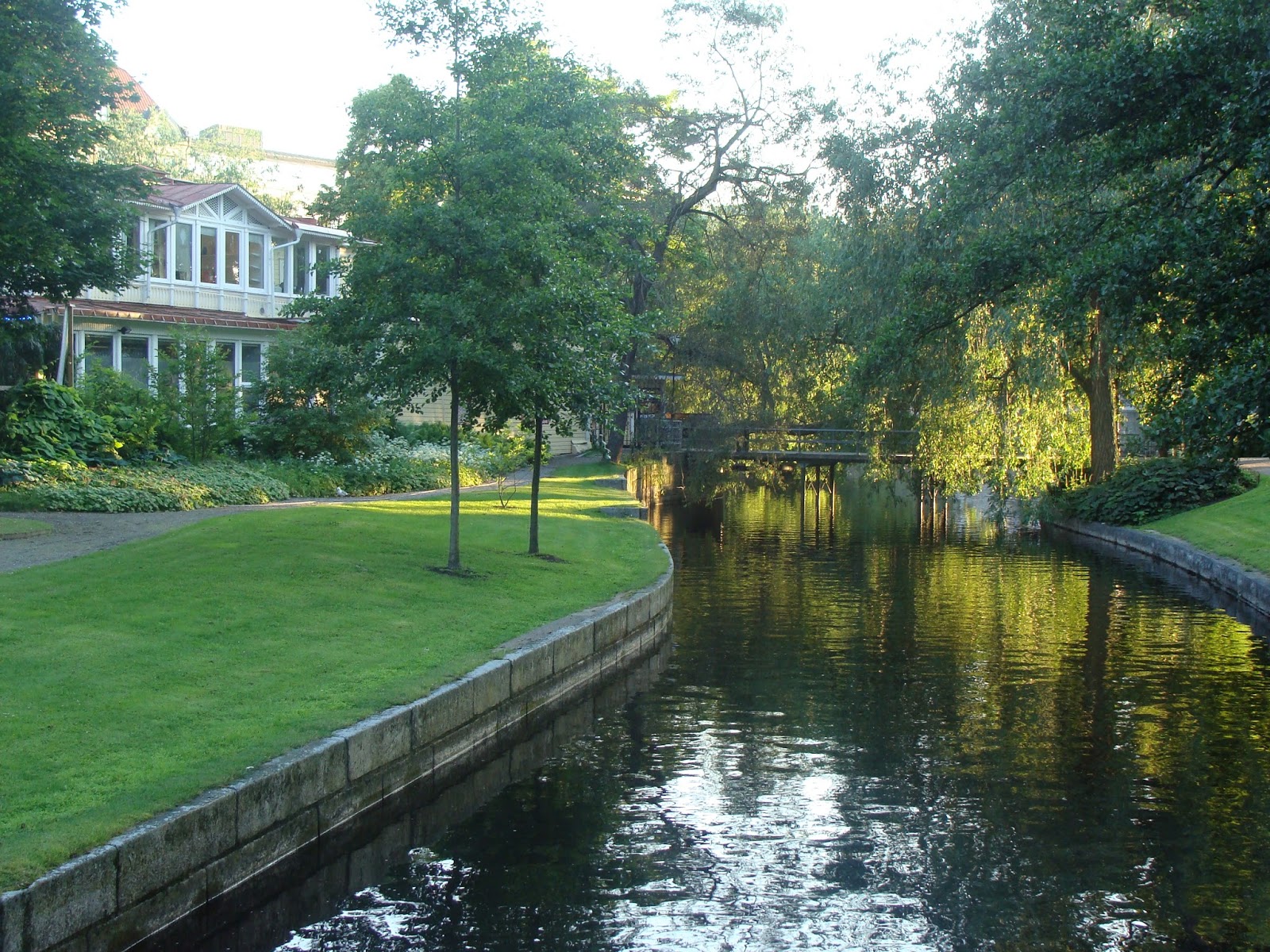
 And bicycles. There are a bicycles everywhere.
Huge numbers of bicycles. Just as in the other cities we saw, but in such a
small place the quantities are exaggeratedly large. Everywhere there are people
riding bikes, but also there are banks and hoards and rows and columns of bikes
parked by the dozen or the hundred on almost every corner and every widening of
every street, in racks intended for the purpose. The bikes are old-fashioned
and in most cases just old, with high wide handlebars, the people are not
dressed for cycling, they often look as though they are doing it for transport,
not pleasure, and despite the numbers on the streets, many of the parked bikes
have clearly not been moved for months or years.
And bicycles. There are a bicycles everywhere.
Huge numbers of bicycles. Just as in the other cities we saw, but in such a
small place the quantities are exaggeratedly large. Everywhere there are people
riding bikes, but also there are banks and hoards and rows and columns of bikes
parked by the dozen or the hundred on almost every corner and every widening of
every street, in racks intended for the purpose. The bikes are old-fashioned
and in most cases just old, with high wide handlebars, the people are not
dressed for cycling, they often look as though they are doing it for transport,
not pleasure, and despite the numbers on the streets, many of the parked bikes
have clearly not been moved for months or years. Sigüenza is a city in the north of Guadalajara, on the banks of the Henares. A strange city.
 So I found myself last week in a city of only 3,000 inhabitants
with a monumental Gothic Cathedral of a size and grandeur that comes quite a surprise,
with a dozen or so side chapels and an impressive structure in the centre
bounded by a rectangle of carved stone to the ceiling and panelled with
sculpted wood, contained the barred high altar and the facing choir stalls, in
the high mediaeval tradition. And this, despite being central to the history of
Castille, is politically part of the same Community that I live in, 300 miles
to the south.
So I found myself last week in a city of only 3,000 inhabitants
with a monumental Gothic Cathedral of a size and grandeur that comes quite a surprise,
with a dozen or so side chapels and an impressive structure in the centre
bounded by a rectangle of carved stone to the ceiling and panelled with
sculpted wood, contained the barred high altar and the facing choir stalls, in
the high mediaeval tradition. And this, despite being central to the history of
Castille, is politically part of the same Community that I live in, 300 miles
to the south.

 And a river valley with a burbling stream, with spring
colours, overhanging rocks and eagles and vultures circling overhead. We were
chased by dogs at one point, and if they ever get together with the birds there
could be trouble.
And a river valley with a burbling stream, with spring
colours, overhanging rocks and eagles and vultures circling overhead. We were
chased by dogs at one point, and if they ever get together with the birds there
could be trouble. It took a few miles, a very interesting and rather steep few
miles, of wandering over the hills behind the village before I found a way to
get to it, but I got there in the end. It is well-designed, all the rooms have
balconies that look out over the water into the distant hills, and there is a
large terrace and walked on which it was doubtless imagined that guests would
sit in the evening to eat and drink late into the night, in the open air and
with the beauty of the landscape below them.
It took a few miles, a very interesting and rather steep few
miles, of wandering over the hills behind the village before I found a way to
get to it, but I got there in the end. It is well-designed, all the rooms have
balconies that look out over the water into the distant hills, and there is a
large terrace and walked on which it was doubtless imagined that guests would
sit in the evening to eat and drink late into the night, in the open air and
with the beauty of the landscape below them. Well-conceived, but it never opened. In fact it is no more
than a shell, and now that there are many cheap hotels nearby and building in
the park area- it falls within it- has long been forbidden, it will probably
stand in proud and ever greater ruin until it’s declared unsafe and destroyed.
Well-conceived, but it never opened. In fact it is no more
than a shell, and now that there are many cheap hotels nearby and building in
the park area- it falls within it- has long been forbidden, it will probably
stand in proud and ever greater ruin until it’s declared unsafe and destroyed.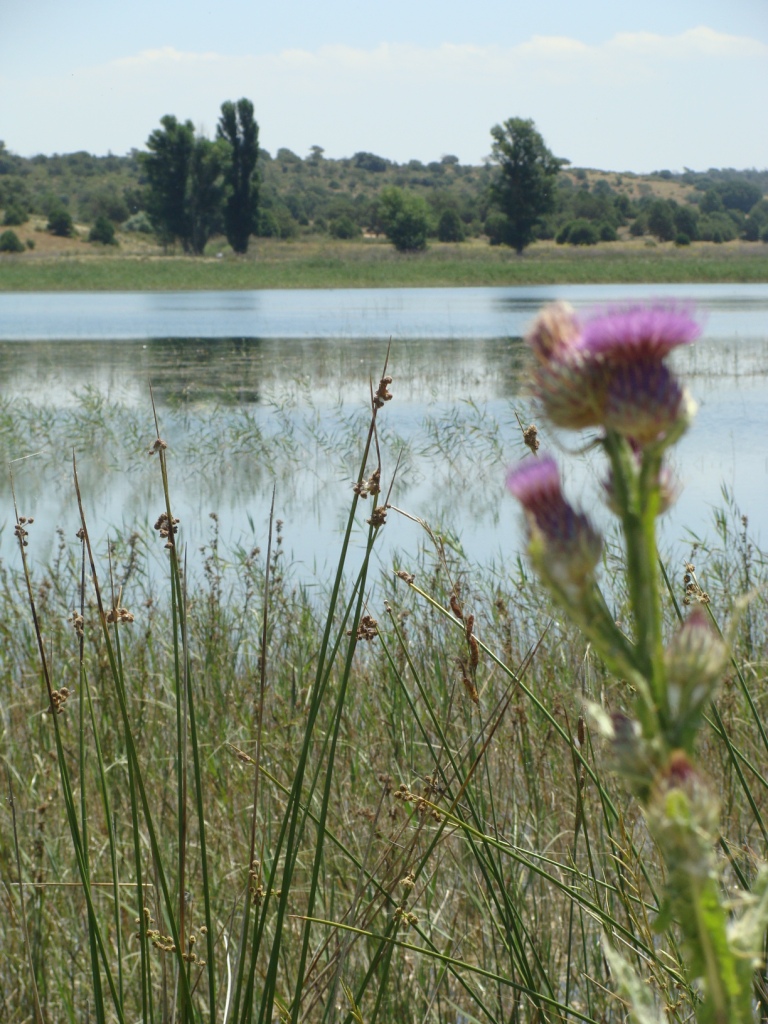 The first of the lakes that make up the chain is known as
Laguna Blanca, because it’s very shallow and the bed is bright white sand. By
first I mean that as the river flows through the area this is the first one it
fills. It’s different from the others, which are mostly karstic formations,
widenings and deepenings in the river created by erosion of the limestone it
flows over. Laguna Blanca is just a shallow basin in the countryside,
surrounded by earth and reeds. It’s also a long way from the nearest village,
and there are no trees to give a bit of shade nor a bar to provide some
civilized relaxation. Even so, there are people who know about it and go there
to escape the crowds.
The first of the lakes that make up the chain is known as
Laguna Blanca, because it’s very shallow and the bed is bright white sand. By
first I mean that as the river flows through the area this is the first one it
fills. It’s different from the others, which are mostly karstic formations,
widenings and deepenings in the river created by erosion of the limestone it
flows over. Laguna Blanca is just a shallow basin in the countryside,
surrounded by earth and reeds. It’s also a long way from the nearest village,
and there are no trees to give a bit of shade nor a bar to provide some
civilized relaxation. Even so, there are people who know about it and go there
to escape the crowds.
 One of the great pleasures of the road is to arrive at a village on foot. You see it first at a greater or lesser distance depending on the terrain, and then you have reference to act as a form of target. You move towards it, as directly as the path will allow you, you begin to make out the spire of the church, the larger houses, the way it is set into the hills around it, the colours of the walls and roofs, the feel of the place, you begin to sense the activity that goes on there, and then to smell it, too, be it cows, fish, industry, machinery, powdered earth or humanity.
Then you are in it, you have a look at anything that seems worth it, you stop for a drink or a bite, you take a few pictures, exchange a few words, and you set out again, leaving it behind as the road takes you onward. The road (the path, the track, it’s all one) dictates your movements. You go where it goes.
On the road you move through places that those who live there think of as fixed. To them they are the centre of the world, at least for a time, but to the caminante it is the village that moves around him, through him, past him. It was before you, now it’s behind you, another spot on the horizon, another reason for wandering.
One of the best places you can arrive at on foot is Santillana del Mar.* If you approach from the coast along the clifftops, which is the best way to do it, you climb into the hills, pass through Arroyo, an olde worlde collection of houses in a little dip with a stream running by (this time the name is quite true) you walk past the Japanese girls with blisters sprawled on the side of the road (I mention this because they’re probably still there; neither of them looked as though they would ever move again), and suddenly you look down on Santillana.
Santillana is almost entirely mediaeval; the central part, which is most of it, consists of 15-16thC wood and stone houses, and cobbled streets, beautifully kept and with few modern intrusions. Cars don’t enter, many of the houses are used as shops and cafés, and the whole effect is of going back to a place from another time, not a museum, a real place that lives and breathes, but without the smell and the hunger.
That’s what you see as you approach Santillana from above, an expanse of brown and black buildings, many like small palaces, the Colegiata, a kind of monastery, another church and cloister, and streets of more modest houses, all looking bright and charming, and on the edge, smallholdings in which cows of the same brown colour chew grass philosophically, all of this set in the beautiful hills of the Cantabrian coast.
It’s worth pausing a moment to enjoy all of this before you enter the town. And that’s why I travel on foot.
*It’s known as the town of the three lies because it is neither holy nor flat nor by the sea (which is what the name would suggest). It would be possible to argue that none of them is strictly false but in any case the place is named for St Juliana of the Sea, who did something Godly several centuries ago and is therefore now buried in a rather nice mediaeval church in the town, the Colegiata.
One of the great pleasures of the road is to arrive at a village on foot. You see it first at a greater or lesser distance depending on the terrain, and then you have reference to act as a form of target. You move towards it, as directly as the path will allow you, you begin to make out the spire of the church, the larger houses, the way it is set into the hills around it, the colours of the walls and roofs, the feel of the place, you begin to sense the activity that goes on there, and then to smell it, too, be it cows, fish, industry, machinery, powdered earth or humanity.
Then you are in it, you have a look at anything that seems worth it, you stop for a drink or a bite, you take a few pictures, exchange a few words, and you set out again, leaving it behind as the road takes you onward. The road (the path, the track, it’s all one) dictates your movements. You go where it goes.
On the road you move through places that those who live there think of as fixed. To them they are the centre of the world, at least for a time, but to the caminante it is the village that moves around him, through him, past him. It was before you, now it’s behind you, another spot on the horizon, another reason for wandering.
One of the best places you can arrive at on foot is Santillana del Mar.* If you approach from the coast along the clifftops, which is the best way to do it, you climb into the hills, pass through Arroyo, an olde worlde collection of houses in a little dip with a stream running by (this time the name is quite true) you walk past the Japanese girls with blisters sprawled on the side of the road (I mention this because they’re probably still there; neither of them looked as though they would ever move again), and suddenly you look down on Santillana.
Santillana is almost entirely mediaeval; the central part, which is most of it, consists of 15-16thC wood and stone houses, and cobbled streets, beautifully kept and with few modern intrusions. Cars don’t enter, many of the houses are used as shops and cafés, and the whole effect is of going back to a place from another time, not a museum, a real place that lives and breathes, but without the smell and the hunger.
That’s what you see as you approach Santillana from above, an expanse of brown and black buildings, many like small palaces, the Colegiata, a kind of monastery, another church and cloister, and streets of more modest houses, all looking bright and charming, and on the edge, smallholdings in which cows of the same brown colour chew grass philosophically, all of this set in the beautiful hills of the Cantabrian coast.
It’s worth pausing a moment to enjoy all of this before you enter the town. And that’s why I travel on foot.
*It’s known as the town of the three lies because it is neither holy nor flat nor by the sea (which is what the name would suggest). It would be possible to argue that none of them is strictly false but in any case the place is named for St Juliana of the Sea, who did something Godly several centuries ago and is therefore now buried in a rather nice mediaeval church in the town, the Colegiata.


