Showing posts with label The Hickory Wind. Show all posts

Tuesday, June 5, 2018

The Beauty of Water

I mentioned in passing that the lakes are full and the animals fairly chipper. It occurs to me that I should now expand on those remarks, as they are things which mark very vividly the character of the area, and so greatly affect the ascetic enjoyment of those of us lucky enough to be idle in the midst of it.

The lakes come and go over an irregular cycle lasting some years, as they are fed by an underground aquifer that collects water mainly from the mountains well to the east. When it doesn’t rain there for some time, and it doesn’t rain much in this part of the world, the lakes begin to dry up. Some of them disappear completely, others shrink to a pool or a channel near the middle, and huge expanses of dried mud, which people use as beaches, and the many feet of karstic formations are completely revealed. This is interesting but not attractive, and it means the usual bathing areas become unusable, and the people whose livelihood depends on selling beer to the tourists begin to contemplate the sacrifice of their first born.

Then it rains, and it all begins to change. This spring it has rained a lot, on and on it went, week after week. We love rain here, because it’s an agricultural region (wheat, barley, olives, grapes mostly) and the ground can become barren very quickly without it, and even drinking water can get scarce at times, but there’s only so much rejoicing you can do when you’re beginning to wonder why you bothered leaving England.

Anyhow, it rained a lot this spring (we don’t usually have spring as such, it just shifts from winter to summer over the course of a few days), and when we arrived here, expecting to see some improvement on last year, we found flowing waterfalls, brimming lakes teeming with fish, crystalline currents rushing, turning into crashing white-foamed arcs digging out holes in other great swirling pools. All bathed in bright sunlight (until the evening when storms arrive) and full of people, of course. I ask again the eternal tourist's question, ‘Do other people have to enjoy this, too?’

The land is green. There is a short period of the year, that very short spring, when the land is green, not quite the bright green of northern Europe, or even northern Spain, the green of places that have a lot of rain, and vegetation that can make the most of that rain, but definitely green. Spotted, in places carpeted, with red poppies, blue rosemary, purple lavender, and yellow things of various kinds. It’s as varied and as colourful as it ever gets here, and you learn to enjoy it until it all goes dry and brown again in a few weeks.

Wednesday, December 11, 2013

On 'Stringvestites'

I recently wrote- rambled would be more like it- about nonce words, because of something I heard watching ‘Are You Being Served’. Well, Mrs Hickory and I like a bit of old-fashioned British comedy, so we returned last night to Mr Humphries and co., and there was he was in a sailor costume, explaining how he had had to fight off the attentions of a number of people including a ‘*stringvestite’. My linguistic antennae twitched.


From the context it appeared to mean a working-class homosexual who doesn’t look like one. Those who remember that particular piece of ill-conceived clothing, or were forced to wore one, as was my case, are unlikely ever to forget it, but I don't remember any association with homosexuality. The Urban Dictionary's definition doesn't seem quite right, but of course it's probably a much more recent use of the term.


*Google knows almost nothing else about the word, but I have found some comment on its use in the series. There is probably no subject that someone is not prepared to make an idiot of himself over in the Guardian, and there is certainly no subject in or out of this world that doesn't have dedicated Internet forums. Here Matthew Parris is quoted at length, speaking more intelligently (scroll down to the end). Neither sheds much light on John Inman's use of the word, but their reactions to it are interesting in themselves. I don't call Stuart Jeffries an idiot, by the way, or Mathhew Parris intelligent, because I agree with one or disagree with he other. Matthew Parris gives a personal interpretation of the character of Mr Humphries, and some similar characters and performers, from his memories of being a secret homosexual in the 70's. He doesn't claim that everyone should share his experience or accept his arguments, he just explains how it was for him. The Guardian writer, on the other hand, appears simply to tell his readers what they want to hear. He might be right, and Matthew Parris wrong, but he hasn't helped us to understand anything.

When a footnote becomes longer than the entire post, some editing may be required. Stopping is also a good idea.

Sunday, June 9, 2013

The Grass Ain't All That's Blue in Kentucky

To judge the truth or falsehood of this statement requires the construction of a series of contexts in which it is possible to understand the words and the ideas expressed by their composition to have meaning about which argument may proceed.

On the face of it, and interpreted with a minimum of real-world knowledge, without which no context can be sufficiently reconstructed, the statement affirms that there is something in (the state of) Kentucky which predominantly reflects electromagnetic radiation in the wavelength range ~450-495nm. This much can easily be shown to be true, but the truth of the full statement is contingent on the grass in that state also having that property, and this is rather more problematic. It is reasonable to assume that the reference is to Poa pratensis, but even this specific grass is not in fact blue. The seedpod passes through a blue stage as it matures, but, unlike flowers, grasses are characterized by the enduring hue of the stalk, not by a moment in the life of a small part of themselves.

The line is the title of a song and it is necessary that it be true in some sense, or the song would be meaningless, worthless. Let us postulate that the song is not in fact worthless, that there is truth in this statement, and try to uncover the type of truth that lies within it.

Truth is entirely context-dependent, because meaning is entirely context-dependent. Much of the difficulty in determining what is true comes from insufficiently rigorous definition of the context in which the statement to be assessed is made*. Here we begin to see that the truth of the implicit and explicit statements in the above sentence must be considered each in a context of its own. The word ‘blue’, in the absence of any context other than what it conveys in isolation to a normal speaker of English, suggests a colour. In this context it would be clearly false to say that the genus Poa is blue. The grass of Kentucky is, however, nominally associated with the colour blue, and in the context of socio-cultural symbolism it may clearly be held to be true that the grass in Kentucky is blue. This is important, because if it were not so the line would be weakened to the point of meaninglessness. But it also shows that acceptance of the statement as true depends on our placing it in a context quite different, scarcely even intersecting, from the original context in which placed the term blue.

The Kentucky reference suggests that it is a country song, and is therefore, about some guy getting drunk because his girl has left him. Suddenly we are making considerable progress, because this leads us to the idea that the other thing in Kentucky which is, in the context of human emotion as expressed in fireside slang, blue, is the singer himself. This can be established beyond doubt by listening to the song, and it will be found to be true. It also gives the line a dramatic interest which the mere affirmation of the existence of blue doors, cars, trousers or lawnmowers in that beautiful part of the world could not possibly have. But note that there is no overlap whatsoever between the contexts in which it is necessary to understand the use of the term ‘blue’ in order to attribute the quality of truth to the original statement.

I conclude, therefore, that the proposition is demonstrably true, and that the non-intersecting contexts in which the parts of the proposition must be interpreted are contained within it, at least when it is read by the kind of person for whom it was intended. So not only truth, but successful communication.


*"You don’t love me anymore, you’re seeing that blonde at number 27." "My darling, I cannot answer this accusation, you are insufficiently rigorous in defining the epistemological context of your remarks."

Thursday, May 2, 2013

The Spring and Blogging


The original subtitle of this blog was ‘When I work out what this blog is about, I’ll let you know’. It was intended to express the truth about the state of my intentions, but it was only a filler that I expected to change quickly. In fact it stayed there for more than two years. Well, that’s blogging, I suppose. You never really know where it will take you.

But I did change it eventually, and now this little experiment in talking to myself is subtitled as you can see above. It not only reflects the current state of my intentions, it is also slightly more informative for the reader who stumbles across it. An improvement, then.

But is it really true that this what I want to limit myself to? Do I need to feel bound by it?

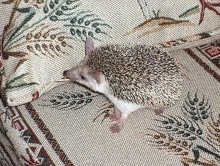
Hedgehogs are pretty, exotic, neurotic, fetishistic, sociable when they want to be, and very funny, usually when they don’t want to be. Everyone loves a good hedgehog story.

Beauty is very much a subjective thing, of course, but the perception of beauty is often shared, and we may be happy to learn of and understand the beauty that others have seen. If it is not found to be shared, it can come to be shared, and that sharing is a pleasure in itself.

There is beauty in mathematics, and perhaps one of the things that makes a mathematician is the ability to recognise that beauty. There is a beauty in music which I think is only truly appreciated by musicians. There is a beauty in almost every aspect of the world and of human existence which some of us can recognise and be inspired by. The arrival of spring reveals a great deal of hidden beauty in the world which in turn shows up as greater beauty in our soul (or spirit). It is quite possible that a conscious, intelligent being could not exist without a concept of beauty. Without it the mere instinct for survival would not be enough to power our will to live. I like to find beauty.

Truth, the third leg of my rather lopsided blogging triangle, is a completely different matter. It is very difficult, perhaps impossible, even to define truth, much less agree on what it is.

There are many ways of presenting the truth, many ways of believing you have arrived at a truth, but in the end it depends very much on the rules applied to the search, and on the context in which they are applied. Pure mathematicians use strict definitions and rigorous logic; it is possible to identify truth and falsehood absolutely, within the universe of concepts to which those rules have been shown to apply coherently. Applied mathematicians wave their hands about. Politicians, men in pubs and bloggers shout, bombast, misdirect, appeal to common sense, mysticism or the intellect of the reader/listener, and more or less make it up as they go along in their attempts to be seen to be right, and to have their pronouncements accorded the accolade of truth.

What was true is suddenly shown to be false. What once was, is not. What was not, now is. We argue about facts when we should be arguing about definitions, we argue about definitions when we should be arguing about facts. We argue about both when we have little or no understanding of either, and ‘the truth’ is often simply the point that I, or the other chap, got bored with the argument.

Despite all of these difficulties, I shall continue to blog about truth, because I think it matters, and the search for it is endless fascinating. And I shall continue to blog about beauty and hedgehogs because they make life more fun. And I shall occasionally talk rubbish, because not even I can be right all the time ;-).

Saturday, March 9, 2013

Some Thoughts on Freedom


Polygamy is illegal because it is against the doctrines of Christianity. In a culturally Christian culture we still haven’t got as far as challenging that particular bit of orthodoxy. Its time will come. In any case, it no longer matters much. Marriage has become, as it should be, a private arrangement, which people enter into how they wish and when they wish. It is only if you want to be recognised by the state that it will take any notice of you at all, but if you wish to share your life with someone of the opposite sex, or the same sex, or several of each, or three men and a goat, the state will not bother you much. It is one of the very few areas where state interference has decreased in recent years. It is true that you will not get official permission except for some of these arrangements, but it matters little. It mattered when the government and your neighbours would make your life a misery if your lifestyle wasn’t sanctioned by the right paperwork, but that is now no longer the case in Britain. Therefore polygamy is not illegal. It’s true there is no form for it, but there is nothing to stop you living with as many people as you want, in whatever sexual and social arrangement you choose. Some of your neighbours might still purse their lips, and the Daily Mail will encourage them to throw manure at you, but they won’t dare, as they no longer feel courage in numbers.

Similar considerations apply to business hours, particularly Sunday trading. Hours of commerce are restricted for reasons which have largely been forgotten, but it is still difficult to change the rigidly followed traditions. Trade, fortunately, is flexible, and the trader has found ways to give his customers what they want when they want it, even if the Vicar or the Councillor are not happy about it.

I made similar remarks when Theodore Dalrymple stated tangentially that we are quite right to forbid public necrophilia. I don't know whether we do in fact forbid it, it's quite possible no one has ever thought to make it illegal. But if it is illegal it is not because we are right to ban it but because there is no one who cares about it. If there were an underground interest in it, growing slowly, taking advantage maybe of increasing public and institutional acceptance of sex, we would be having a quite different argument. And we probably would be wrong to ban it, though ban it we certainly would.

The prohibition of the burqa/niqab is a matter of freedom or oppression depending on what its prohibition is intended to achieve, or will in fact achieve. If Muslim women in Britain are forced to wear it against their will, by their husbands, then a prohibition will make it much harder for men to force women to hide from life and the world. If, on the other hand, Muslim women choose freely to express/obey the tenets of their faith/culture, then a prohibition restricts their freedom for no reason and so is wrong. The question, then, is how do we know what we are trying to respond to, and how do we establish numbers, percentages, proportions, and sort out the mess of overlapping desires/beliefs/decrees/impositions to arrive at something fair and just?

I think the answer is we don’t. If a woman who does not want to cover her face is forced to do so by her husband, she has the same recourse in law as other abused women, if she so considers herself. If there are cultural difficulties which make it unusually difficult for her to take advantage of those laws, there are people who could work to overcome those obstacles. To prohibit women from wearing a particular kind of dress is, it would appear, wrong.

The assumption always seems to be that no woman would wear a niqab/burqa if she were not forced to do so, but this is almost certainly not true.

Religious freedom is not a special kind of freedom that only religious people have, it is just freedom. Freedom of religion is freedom of belief, is freedom of opinion, is freedom of speech, is freedom full stop. They are all the same thing, and we all want to have them.

It annoys me when people defend the freedom of others to hold and profess their own beliefs, and then have to add, ‘however absurd/irrational’. It is a little tick which betrays an unreflecting sense of the superiority of their own reason to that of people who don’t agree with them. It is not unnatural, of course. Most of us believe that being right, according to our own lights, makes us better than those who are wrong, but the middle of an argument in defence of freedom is the wrong place to express that feeling. A small point, but there you are.

Puritans always follow the orthodoxy. What makes them feel good is knowing the crowd is behind them as they stop other people having fun, or freedom. The exact same types who are now trying to ban tobacco, alcohol, food, sugar were using the same arguments to attack homosexuals fifty years ago. Certainly some people find the smell of tobacco unbearably unpleasant or the presence of drunk people frightening or they have seen their brother die a horrible death after smoking forty a day for twenty years, but most seem to be are motivated largely by the desire to stop other people from doing what they want.

Monday, March 4, 2013

The Guardian on Anthropology


In the Guardian today there is an article about the Yanomami, and how one of the greatest experts on them, Napoleon Chagnon, iscriticised for describing some of the more violent aspects of their society. Some of the criticisms are from anthropologists who have also worked with them, and who dispute some of his descriptions, but the majority seems to be from people who complain thathe  is not playing the proper progressive role of the social anthropolgist, which apparently is to ignore the observed facts and describe them within the terms of the required narrative, as exploited by modern capitalism, living in harmony with nature,  having a great deal to teach, and a moral right to exclusive ownership of the land they live on, etc. The truth does not appear to matter much and this is a great shame.

The early ethnographers of the 19th and 20th centuries were concerned with learning about the societies they studied. They lived within them, not beside them, learning the language and the way they saw the world, to better understand not only what they did but why they did it. These observatiuons were framed within a number of reference paradigms, rather than being indiscriminately assessed in terms of the ethnographers own culture. The purpose of this was the purpose of all science, to allow the truth about a particular society to be discovered. One of my heroes, Bronislaw Malinowski, in the introduction to 'Argonauts of the Western Pacific', sets it out very clearly.

In the article, Chagnon is quoted as saying the following:

"In the past 20 or so years the field of cultural anthropology in the United States has come precipitously close to abandoning the very notion of science,"

"Those departments of anthropology whose members adhere to the scientific method will endure and again come to be the 'standard approach' to the study of Homo sapiens, while those that are non-scientific will become less and less numerous or eventually be absorbed into disciplines that are non-anthropological, like comparative literature, gender studies, philosophy and others,"

I shoul d say that the article is surprisingly good, and even the comments are, on the whole, worth looking at, if only to get a feel for the terms of the argument. This one, for example, describes what was once the goal of anthropology quite well.

A few months ago Anthropoly.net, a blog that I used to read regularly (when it was updated regularly) published this article lamenting the fact that Anthropology is the lowest paid and least prestigious of sciences in the US. The comments demonstrated perfectly why this is so. I left the following comment which is very similar to the Chagnon quote above:

The fact that you think anthropology can prove the superiority of big government probably goes a long way towards explaining why it is so little respected. What was once (and in part still is, I imagine) a rigorous observational science has become, to the public eye, and apparently to the academic one too, conflated with sociology, cultural studies, lit crit and generalized hokum.
I suspect that is largely the fault of those who have been doing anthropology over the last decades. They have made the public face of anthropology political rather than scientific.

Saturday, December 22, 2012

Crowd Control and Self-Fulfilling Fears


Up  to the minute as ever, I’ve been wondering about the enquiry into the deaths at Hillsborough stadium in 1989, and the context in which it happened. To pick the enquiry and the report to bits would take a great deal of time and effort, so it’s a good thing for me that it isn’t my intention to do it. It would be both lazy and cynical to think that, just as at the time, and in the prevailing mood, it was easiest to blame the fans, now, when the public mood has changed, and everyone in a position of responsibility that day is dead or retired, it is easiest to blame the police. Lazy, cynical and possible false.

It is likely that none of those who died that day were directly responsible for the events that led to their deaths. It is not my intention to suggest otherwise. But one day it was going to happen, because of the culture in which football was played, and to a certain extent still is.

Football fans had for decades been accustomed to behaving like animals. The more they behaved like animals, the more they were treated like animals, and the more they were treated like animals, the more they behaved like animals.

I used to go to Highbury in the mid-eighties, and I saw the fans herded like wild dogs from the station to the ground, between lines of police, screaming abuse and making threatening gestures at passers-by. I saw them howling like crazed apes at opposing players, opposing fans, and each other, even when not much was happening. We ignored the lines and walked like human beings towards the gate, were greeted with a ‘good afternoon, sir’, which we returned, showed out tickets, allowed ourselves to be apologised to for having our pockets patted, and were invited to go in and enjoy the game. The police took no notice of us. Because we did not invite them to treat us as animals.

The cages that caused the deaths at Hillsborough were still there in part as a result of the brutish, sub-human thuggery of Liverpool fans at the Heysel stadium in 1985, who caused the deaths of 39 Italian fans simply because they realized that they could.

The decision to open the gate at Hillsborough was taken by the police to prevent a mob forming outside the ground, because they knew very well what a mob like that was capable of. I repeat, one day it was going to happen. In this the clubs and the league are no different from the trades’ unions and other organizations that call violent gangs out onto the streets in the knowledge that there will be trouble, and then wash their hands and pretend it’s someone else’s problem.

It should have been dealt with decades before. Grounds should have been shut, points deducted, clubs relegated even, when the fans didn’t behave. It would have meant legal battles, some clubs, the unlucky ones or those that didn’t take their responsibilities seriously, would have gone to the wall, the press and the public would have been against them, calling it an over-reaction. It would have taken courage, political and commercial courage, which is why the politicians and the FA were never going to do it.

I’m a teacher, and perhaps I see things differently from many people, but the idea of treating people as inhuman, even when that is how they see themselves, is disagreeable to me. The intention should have been to rescue the humanity of the fans, from themselves, rather than accept them at their own estimation, as wild animals. Football could have become what other sports are, entertainment, fun, rather than tribal warfare.

Monday, October 29, 2012

Reading the American Election


I haz had ice-cream
The blog Neuroself, written by Peter Freed, who is, I think, a psychiatrist as well as a psychotherapist, is always interesting for anyone who is fascinated by the human mind. He has live-blogged the US Presidential and Vice-Presidential debates, and very interesting it’s been. He has been looking at the body language to try to learn about the state of mind of the candidates and, as or more importantly still, to try to predict how the audience will react to the paralinguistic communication. Most of what was said wasn’t especially interesting or memorable in itself, but the behaviour of the candidates, the impression their bodies left, will be remembered and may influence voting. (I didn’t watch any of the debates, I’m quoting my sources.)

I am not American, do not live there, do not expect whoever wins to invade Britain or Spain, or to solve the world’s economic problems- the rest of us will do that, eventually- so it is for me only of sporting interest who wins and who loses. Neither of them impresses me. They both look like politicians to me. Different types of politician, very different, but politicians nonetheless.

I don’t know Peter Freed’s politics, if he has any. He appears to be doing a clinical analysis with no partisan intent. In italics are his comments, all from the final debate between Obama and Romney on the 22nd inst.

It’s common wisdom in psychotherapy and policing alike that the willingness of someone to talk depends on the autonomic nervous system status of the questioner.

I wish he had clarified in what sense the correlation goes, and how it works. Also, why it was relevant here.

3. Mouth moistness: blood (and plasma) moves to muscles during high sympathetic tone. It moves to the internal organs and mucus membranes in parasympathetic tone. Mouth dryness is therefore a sign of sympathetic tone – whoever’s mouth is dryer is losing.

I could have done with more explanation of that as well, but there is enough to know what is happening when one or other changes tone in that way. What he doesn’t quite say, but I assume to be true, is that in contests like this, each combatant is aware of how the other is feeling. They both know who’s winning and who’s losing.

4. Sentence complexity: sentence complexity is governed by the prefrontal cortex, which orders, sequences, and prioritizes ideas. PFC is turned off during stress – the neurons literally have cortisol receptors that depolarize them during stress. This forces the organism back on tried and true evolutionary strategies. Sentence complexity is therefore a marker of parasympathetic tone.

This is absolutely fascinating. It is simply a physiological explanation of the fact that it is harder to think when under stress. But it gives you something quantifiable to watch for.

And do they look at their opponent first or second? In primate fights monkeys don’t look at other monkeys unless they want aid.

Humans, of course, do the same. In confrontation, they look only at the opponent if they are confident of beating him. If they look around, they aren’t happy.

Obama has the forced, memorized facial expressions of a natural beta.

'Obama is a beta.' If I were a journalist, that would be my headline. But I am not interested in creating truth, rather in finding it (today, at least). I don’t wish to put words in Peter Freed’s mouth. He has made a technical interpretation of an observation of a particular gesture at a specific moment, nothing more. But I find it easy to take it as a general truth about Obama. He is a beta male, one of those who benefit by their ability to serve the leaders. They may become leaders themselves, but unless they can win, or inherit, alpha status, they are only surrogates, allowed to front for the real leader, by his gracious permission.

Many political leaders are mere figureheads, bureaucrats, with no real ability to lead. Obama is not Gordon Brown, or that Belgian chap with the glasses, but he isn’t an alpha male. Romney, perhaps.

Romney is raising his eyebrows frequently as though teaching in a caring way a young mentee. This is the behavior of a benevolent elder. Obama does not raise eyebrows as though teaching – but rather when surprised by his own ideas. This is the behavior of a talented student. In split screen, Romney seems to be higher status.

Hmmm. He knows his primatology. I wonder if Obama does.

In the split screen look at Obama’s flat forehead as he gazes at Romney. This means that cranial nerve 7 is not animating the face with nonverbal dominance signals. This studied eye contact, not automatic. I still say he’s feeling submissiveness signals from his limbic system, hypothalamus, feeding off Romney’s confidence, despite cognitively rejecting Romney’s legitimacy.

More fascinating insight into the physiology of primate confrontation and social hierarchy. This was, undoubtedly, a brutal, bloody battle. Both are fighting for something which probably means more to them than their lives, at least at that moment, and they have to convince a huge, unpredictable audience that they should live and their opponent die. The stress of these occasions must be enormous. It is only the preparation of the candidates, who have been doing this all their lives, that stopped them from screaming at each other like guests on Jerry Springer.


Wednesday, August 1, 2012

La Mala Hora


More Gabriel García Márquez for your delight. La Mala Hora. In a coastal town- in Colombia, we assume- someone is putting up signs on the walls of houses, causing a murder which opens the book. The mayor has had an agonizing toothache for several days but can’t go to the dentist because he is a political enemy who refused to leave town when told it was in his best interests to do so, and fills teeth with a gun on his tray.

The new judge has only just started work months after taking up office, and the mayor doesn’t trust him. The parish priest is interested in the souls of his parishioners almost to the exclusion of politics. No one knows who is putting up the posters but they become an excuse for the mayor to return to his previous tyrannical ways, a curfew is declared under threat of death, the thugs hired as policemen, for a while confined to barracks, are let loose on the streets, innocents are arrested because someone has to be, conspiracies abound. There is little justice, little law and little religion.

There are few diversions. The priest rings a bell to tell the people when the film starting at the cinema is immoral, and notes the names of those who go in anyway. The circus comes to town just as the curfew is declared, and the mayor is inflexible, even after bartering with the virtue of the fortune-teller. Sex, beer and political hatred are the only real entertainments, and those who have the thick hide and the strong stomach indulge them freely.

The mayor has tried, we are told, to be a little more relaxed about things, but the people are obstinately unwilling to be dictated to unless threatened with death, and even then they are not all as compliant as they might be. So the people are enslaved, impoverished and murdered in the name of the people, a rhetorical trick that bloodstained tyrants have been pulling off throughout the 20th C, and GGM’s good friend Fidel has provided him with a fine example of how these things are done.

This is the purist realism, no magic here. You can feel the heat and taste the dust, and the beer it’s washed away with. You stand beside the characters as they speak and act, you are cowed by their fear, shocked and inflamed by their hatred, and inspired by their courage.

You finish the book with the sense of having lived through it, and you close it, guilty that you must abandon them to the arbitrary whims of the brutal mayor.

Saturday, June 9, 2012

What Bloody Beast is That?


My prickly co-blogger had a very curious experience last night, which we still haven’t been able to clarify, and probably never will.

I awoke to find a pool of blood next to the bed. It would have been of a disturbing size if it were human blood, but Mrs Hickory and I were free from injury, so we thought of our little zoo. The only one who was free that night was the hedgehog, so we went to his sleeping place to check. He was stained with blood on the left side of the neck, and on the leg. He didn’t look happy (hedgehogs nearly always look neurotic, but there is good neurotic and bad neurotic). On the other hand, he was sleeping and he didn’t try to scratch the wounded area.

It’s very difficult to inspect the flesh of a frightened hedgehog, as they refuse to unwind, so we went to the vet for a second opinion. She stuck a needle in him and when he was no longer in a position to argue, had a good look. She determined, she was pretty certain, that the blood was not his. He had no wounds in that area, and it hadn’t come from the mouth or the anus (I already knew that, as he could not have survived vomiting or excreting that quantity of blood. I wouldn’t have expected him to survive even if had come from a wound, and, although he wasn’t quite normal, he didn’t look as though he were about to join the five elements).

So it turned out that the worst thing that had happened to him that day was to be hauled from his bed and have a needle stuck in him. I paid the vet a handsome sum for this information and was delighted to do so. Hickory awoke, looked askance with a mixture of pain and forgiveness, and went back to sleep in his bed, as soon as we gave him his socks back.

This leaves a number of options, none of them very likely. Did he find a small mammal, a mouse or shrew, perhaps, and attack it? A European hedgehog would, but the African hedgehogs are too small. And where is the deceased, anyway? Under the furniture, possibly, but we have found nothing, and he hasn’t returned to it. Not very likely.

So, did a bird or a bat fly through the window, was it followed by a hawk, did they fight, did the hawk leave with its bloody prey, and did Hickory run into the pool of blood on his nightly rounds? And did we sleep through all this, although it happened mere feet from us in the same room? Strange as it sounds, it is most likely what happened. At least, I can think of nothing better. Unless it wasn’t blood at all. But it looked like it, it smelt like it and the vet thought it was. She didn’t do the CSI test, but she knows blood when she sees it.

My prickly friend is now fine, hungry and full of energy. He has even forgiven us for what we did to him. He has probably forgotten what happened, and we shall never know.

Tuesday, June 5, 2012


Pinched from the unimaginatively but informatively named Language Log (see blogroll)

'Decades ago Robert Warshow wrote an essay on "The New Yorker" that explains what Pinker is grappling with in trying to understand their need to create a false dichotomy in which they are the side of the Prescriptivists/Angels and Civilization itself, as well as their inability to understand that you can describe reality, recognize operative rules, and still acknowledge there are standards of usage that are useful and socially significant although entirely arbitrary from an linguistic point of view.


"The New Yorker has always dealt with experience not by trying to understand it but by prescribing the attitude to be adopted toward it. This makes it possible to feel intelligent without thinking, and it is a way of making everything tolerable, for the assumption of a suitable attitude toward experience can give one the illusion of having dealt with it adequately."


[(myl) Thanks for pointing to this essay, which I had not read. The citation is Robert Warshow, "E.B. White and the New Yorker", originally published in 1947 in Partisan Review under the title "Melancholy to the End", and reprinted in a 1962 collection Immediate Experience. It's a review of White's collection of essays on world government, The Wild Flag. I discussed my own encounter with The Wild Flag here.]'


This is very well put. It articulates the sense of hopelessness, of swimming through treacle, that I experience whenever I try to discuss anything remotely controversial,  or anything at all connected with economics, politics or what we might call general morality with almost anyone at all. I only tend to do it with the sort of people who throw in their own opinions on such subjects, uninvited and often unwanted, with the obvious assumption that a) whatever they just heard on the TV news is a complete and accurate analysis of the subject, and b) no reasonable person could possibly disagree with them.

The reasons for this are probably not hard to find. There are many subjects on which people feel they should have an opinion, indeed they may well feel that they are defined by their opinion on certain matters, and the more such subjects there are, and the more rapidly they appear and disappear as fashionable topics of conversation, the more difficult it is to do any real thinking or research. People take their opinions, their identity, off the peg from the sources they find at hand.

It doesn’t mean they are always wrong, just that they are not capable of having any real discussion, or of going deeper into the subject. They think they are arguing, but in fact their responses tend to be random dogmatic assertions, which they make no attempt to defend, other than by shouting, and most of the time seem to not even understand.

As you’ve probably guessed, I got drawn into an argument about the Spanish economy a couple of nights ago. And the quote I came across sums up the reason I should not have bothered: the media, or others with the help of the media, give people little bags of opinion, decorated with sequins of apparent explanation. People grab them gratefully and believe they have understood a difficult subject, when all they have done is adopt a second-hand attitude towards it, because it happens to fit their prejudices. The range of subjects to which this applies is enormous.

The response of most people to anything new- be it an idea, a person, a culture, an object, a practice, a place…- is defensive; they want to know if it will hurt them. Then they want to know how they can make it old as painlessly as possible, they want to know how it fits into the stuff they already know. It’s much easier to dismiss it as bad than to try to understand it, and if they feel that they must understand it, they have the New Yorker and a thousand other publications to tell them that they have understood it, without going to all the trouble of thinking about it. Once they are persuaded they have the orthodox attitude to it then they can relax and life for them can go on as before. The New Yorker and its brethren provide an invaluable service.

Sunday, May 13, 2012

Viva la Libertad de Expresión


Since I am usually held to be a card-carrying capitalist with special baby-eating privileges I’m expected to be strongly opposed to the 15-M ‘indignaos’ marches being held around Spain. I’m not opposed to them at all, in fact. I have many times defendedthe right to freedom of speech and opinion, to peaceful protest, and to strike, even- especially- when I disagree with the way they are exercised.

I don't know why the right gets blamed for 'trying to suppress freedom of expression', though. In my experience it's the left that believes only opinions they agree with may legitimately be held or expressed.
(Note to self: stick to the point, this is not a political rant.)

I believe in freedom. I dislike any kind of control or restriction. Which doesn't mean that some such controls and restrictions are not necessary, but there have to be very good reasons and they need to be questioned always.

There is no but here. If we cannot say what we think we are not free. Their freedom is my freedom.

There were perroflautas, hippies, wanderers, unemployables, civil servants, professionals, most of them young. There were many placards with different messages. some I agree with, some I don't. some were serious, some trivial. The ones you can see in the photo have banners calling for 'Real Democracy Now'. This was how it started a year ago, at the time of local and regional elections here. People were begin to realize and to get exercised about the fact that the system of closed lists that has always been used for these elections puts enormous power in the hands of (often unknown) party controllers, and almost none in the hands of the demos. It's not a good way of doing representative democracy. In this I agree with them completely. The mostly unemployed younsters who joined them added their own grievances, mosly picked up, I would imagine, from a variety of sources in which their own experience didn't figure too highly.

There is also a reference to the cost of higher education and why should their parents have to go begging to pay for it, one that says 'Long Live Iceland', for some reason I don't understand, and another that rejects the presence of private companis in schools. I haven't heard much about this process in education, but several hospitals in the region have had their management placed in the hands of private companies, the idea being that these companies know what they're doing and how to do it more efficiently than the monolithic civil service, and what we want is better and cheaper services. It might not work, but if it doesn't, that will surely be the time to protest, not before it has had a chance to work.

There were half a dozen relaxed-looking policemen, in normal uniform. no trouble was expected and i don't think there's been any. in madrid and the other big cities it's likely the usual ignorant extremist thugs, some of them not so ignorant, just scum, will join in (apparently not, there seems to have been very little violence around the country), but it doesn't tend to happen here. Here people say what they want and that's that.

They should have, and thankfully do have in this country, the right to hold and express their opinions, whatever they are.

They marched through the streets, at times obstructing the traffic. Despite their distrust of politicians and authority in general, I wonder what would have happened if someone had refused to let them block the street in that way. I suspect they would have said indignantly that they had permission and you couldn't stop them. You also wonder, when they blame the banks for everything, if they would rather go without the house, the business or the car that they or the parents used a bank to finance, or to sacrifice their parents pension on the altar of ideological purity. Perhaps not. But hey, how many of us are coherent in everything? And in any case, there is no coherence clause attached to freedom of belief and expression. Just as there is no intelligence clause. Nor should there be a morality clause, although it seems there sometimes is.

There were drums, there was dancing, there was laughter.

They had fun, they made their point, which won't be explicitly heard by those they were mostly talking to, but an impression is left and they will have achieved a little of what they wanted. And no one was hurt or more than mildly inconvenienced. The way it should be.

It's not freedom of speech we right-wingers object to. It's mob violence. Some people can't tell the difference.

Tuesday, May 1, 2012

Dalrymple on Drugs: A First Draft


Yesterday in the comment thread to this article at Orphans of Liberty on the question of the legalization of drugs, contributor Sackerson said in the comments that he had challenged many people to rebut the arguments set out by Theodore Dalrymple in an article in the City Journal in 1997, and no one had done so. I skimmed the article and wasn't impressed by it, so I rather foolishly offered to take up the challenge. Here is the result. (I call it merely a first draft partly because I shall ceratinly be forced to revise it as I receive comments or think more carefully myself, and also because it's a good excuse for the errors and weaknesses which undoubtedly exist.) Comments, constructive criticism and random observations are welcomed. Abuse will be acceepted with equanimity.

Theodore Dalrymple starts off with the rather trite observation that collective ideas about right and wrong are mutable. By rhetorical sleight of hand he implies that this is a bad thing, something any British homosexual, to take the first example which springs to mind, would dispute.

He states without evidence that attempts to regulate the consumption of mind-altering substances are as old as society itself. This may well be true, but it is no more than the observation that in any society there will be people who try to stop other people doing things, either to exercise their own power or to control the supply of something valuable, both of which may well apply to such substances. While it is true that “no society has had to contend with the ready availability of so many different mind-altering drugs”, his claim that the “citizenry” is now uniquely “jealous of its right to pursue its own pleasures in its own way” is almost certainly false.

He then sets out what he claims is the basis of the philosophical argument, “in a free society, adults should be permitted to do whatever they please, always provided that they are prepared to take the consequences of their own choices and that they cause no direct harm to others.” This is broadly true. If you can’t do what you want you aren’t free. If you can accept that there are certain limits on your freedom of action, imposed by your own body and the world around you, you have not lost your sense of freedom. If you accept that others may legitimately place certain limits on your actions, you have not lost it, either. But I would question the idea that you must be prepared to take the consequences. Often those consequences are an arbitrary invention of other people, and constitute an unacceptable limitation of freedom. In fact I prefer the words of John Stuart Mill, whom he also quotes, “The only purpose for which power can be rightfully exercised over any member of the community, against his will, is to prevent harm to others”.

This principle, he goes on to say, is almost useless in practice, because any action of ours will have effects on others which society cannot, in practice, make us answer for. This is as true for drug-taking as it is for anything else. He does accept that although the principle is not practical, it is hard to think of a better one. But what he fails to realize is that Mill’s principle is not intended to act as a generator of precise rules in every individual case; it is supposed to provide the normal people, the “citizenry”, with a portable yardstick against which to measure the actions of the powerful. If we can, in large numbers, see clearly that some action of government is wrong by this measure, we have a better chance of keeping them under control.

No one can say how another ‘should’ use his freedom. We are told in the article that the freest man is not the one who slavishly follows his own appetites- which may be true but is a matter for that man to decide upon, not his doctor or his government. We recognise, we are told “the apparent paradox that some limitations to our freedoms have the consequence of making us freer overall.” Do we? I don’t think we do at all, you know. As a premise on which to base an argument of this kind it is extraordinarily weak, if not absolutely false.

He says that commercial displays of public necrophilia are “quite rightly” not permitted. I will take his word for it that such things are illegal in the USA, for whose public the article was written, by you could well ask why. I realize that he uses it as an example of something which harms no one and yet its banning is welcomed by society in general. But all he really does is observe that it is banned, not explain why it should be banned. Presumably, far from being an example of universal agreement among the people of the US that such things must not be tolerated even if they do harm no one (which is true by hypothesis), it is in fact a hangover from the all-embracing Puritanism which affected their rulers in the 19th and early 20th C, which led them to ban and persecute adultery, miscegenation, homosexuality, masturbation and so on. The reason it is still illegal (assuming Dalrymple is right) is that no one has cared enough to campaign against the ban. He says that even if millions of people wanted to do it or were already doing it ‘our’, by which he means his, resolve to prohibit it would not be altered. This is nonsense. Most of the things that people do want to do have been decriminalized.

He says that it is the essential ‘wrongness’ of it which means it cannot be allowed. It just is wrong, you know. “The fact that the prohibition represents a genuine restriction of our freedom is of no account.” It most certainly is to those whose freedom is so restricted. It’s the fact that only a handful of people feel the weight of that restriction that means the rest of us can dismiss it as “of no account.” The whole necrophilia argument is silly. And irrelevant, as we’re talking about something else.

Again he says, “We lose remarkably little by not being permitted to take drugs.” A little expansion on that remark might have helped us to understand why it is so obviously true.

The whole of this section is concerned with showing that it is up to Dalrymple himself, or people like him (and I am ‘people like him’ in most ways) to decide how others should be allowed to use their freedom. How can he presume to know what other people may want, what choices they should make, how they can be happy, or how they must be controlled, better than those people can themselves. The whole tone of the section, and of most of the article, is like this.

“The idea that freedom is merely the ability to act upon one’s whims is surely very thin and hardly begins to capture the complexities of human existence; a man whose appetite is his law strikes us not as liberated but enslaved.” Do I detect a straw man here? I think I do (and it’s not the only one, “No culture that makes publicly sanctioned self-indulgence its highest good can long survive” follows a couple of sentences later). What he says here is perfectly true and completely irrelevant. Surely no one who argues for drug liberalization in the name of freedom holds that idea of freedom. Perhaps more importantly, people in general, you know, the citizenry, as opposed to the clever people who decide what we can and cannot do, do not hold that idea of freedom.

Drugs (let us assume that we are talking about things like alcohol, cocaine, crack, opiate derivatives) can have extremely detrimental effects on the individuals who consume and on the people around them. And yet, most societies discovered how to make alcohol thousands of years ago. Most of those that didn’t discovered how to prepare some kind of hallucinogenic from the plants around the. They were at times reserved for ceremonial purposes, or restricted to the rulers, or not, but those societies did not die out, or suffer irreversible damage and decay, the moment they worked out how to do it, and for a very good reason, which Dalrymple ignores (although his working life was spent largely with people to whom the following remarks do not apply, he must know that they are true).

The great majority of people do not want to spend their lives drunk or drugged. They are perfectly aware that a little alcohol can make them feel good, and they are also aware that a lot will make them feel terrible, will lead them to do stupid or dangerous things, will cause them to experience pain and discomfort the next day, and will seriously limit their ability to earn their living and to attend to their family and social duties. To do all those other things which they enjoy doing, or which allow them to construct a satisfactory life. Most people did not spend their lives drunk and destroy themselves and the very fabric of society even when alcohol was much cheaper and life was a lot tougher. And they don’t now. Is there any indication whatsoever that people, knowing what they do about heroin, would choose to destroy themselves in numbers any larger than they do now, when it’s illegal and expensive? Of course there isn’t, but Dalrymple seems to assume that it’s only the law that keeps the rest of us out of the opium dens.

His entire discussion of the philosophical arguments against legalization of hard drugs is empty. If a philosophical argument can be made in favour of criminalizing the consumption and commercialization of some dangerous substances (not that governments are guided by philosophical arguments) it hasn’t been made.

He gives a good summary of the problems created by the illegality of drugs, especially hard drugs. But he then tries to argue that the illegality of drugs creates criminals in the same way that the illegality of car stealing creates car thieves. Car theft exists because people who cannot or will not buy them want to have them anyway. Car crime exists because it is illegal to act on that desire. Drug crime, that is the theft and violence carried out by junkies to pay for their habit, and by dealers to defend their business, is mostly brought about by the obstacles the law creates.

If I have to spell it out more clearly, car theft is reduced by the existence of the legal artefact of car crime, whereas the violent, undesirable actions of drug users and traders are hugely, enormously increased by the fact that such trade and consumption are decreed to be illegal.

Most of the rest of the article describes aspects of the writer’s personal experience, as a doctor working for long periods with drug addicts, which is very much greater than mine, and I will not attempt to deny that experience nor the conclusions he draws from it. If that is truly his experience of construction workers I’m not surprised he holds the opinions he does. But he gives no evidence to support his contention that Somalis do not succeed in Britain because they spend all day chewing ‘khat’, nor does he explain why he believes that opiates, cocaine, crack and amphetamines are ‘vastly more attractive than khat. Have Somalis taken up these much stronger stimulants, or do they continue to chew khat, because what is culturally acceptable and normal to them is to chew khat and to be mildly affected by it, not to get psychotic on amphetamines every night.

Despite Dalrymple’s observed experience, the average Somali clearly has no wish to spend his life in a state of deranged paranoia, and the average British construction worker has no wish to wake up every morning in a pool of his own excrement.

In Spain, where I live, alcohol has always been much cheaper than in Britain (the taxes are much lower, although they are slowly closing the gap). It is possible to buy enough cheap whisky to get out of your skull on for the sort of money a teenager has in his back pocket. In the wine regions of the north, the standard drunk when people gather at weekends is the cheaper end of the local wine, which again can get you on all fours before you’ve even noticed your wallet lightening. Any normal working person can afford to get extremely drunk several times a week on decent whisky and palatable wine, but it doesn’t happen. Public drunkenness and the behaviour that accompanies it is looked down on here, even by young people, to a far greater extent than in Britain. People control themselves, for social reasons as well as personal and economic ones. And they do the same with drugs. They do it already, and they would continue to do it if they could buy them in the supermarket.

At least of hearing someone shout ‘Godwin’, I will mention the name of Al Capone. Prohibition was a failure, and an economic, social and human disaster. The ‘war on drugs’ has also caused a great deal of misery and waste, on an unquantifiably massive scale. It is surely time to see if there is a better way of assimilating them into society, because they’re not going away.

We then get some more hysterical slippery sloping, some more wild false analogy (true, the war against death, the war against rape, etc, have not been won, and never will be won, but the prosecution of those wars decrease the total of human suffering; it does not, of itself, add greater and wider suffering to that caused by the original problem) and some well-nourished straw men, before we finish off with a vibrant, earsplitting petitio principii.

The article makes no attempt to offer any alternatives, or to recognise that there are drugs and drugs, and a number of imaginative approaches, the creation of a patchwork of laws, and social pressure, based on a primary recognition of and trust in the essence of humanity and the value of freedom, need to be conceived, and considered, before we can say, even in practical terms, that the status quo is the only way.

In short, he doesn’t make an argument at all. He simply tells us his position in a number of different ways. His experience has suggested to him that a very large class of persons lose control of their will in the presence of easily available intoxicants and stimulants, and from this he concludes that such people must be prevented by law from using them. He barely touches on the minimal effectiveness of that law, nor on the dire consequences that it has, indisputably, had for the rest of us.

His discussion of the philosophical arguments shows a lack of understanding of freedom and of logic, and a strong desire to defend at all costs an entrenched initial position.