Showing posts with label Beauty. Show all posts

Tuesday, June 5, 2018

The Beauty of Water

I mentioned in passing that the lakes are full and the animals fairly chipper. It occurs to me that I should now expand on those remarks, as they are things which mark very vividly the character of the area, and so greatly affect the ascetic enjoyment of those of us lucky enough to be idle in the midst of it.

The lakes come and go over an irregular cycle lasting some years, as they are fed by an underground aquifer that collects water mainly from the mountains well to the east. When it doesn’t rain there for some time, and it doesn’t rain much in this part of the world, the lakes begin to dry up. Some of them disappear completely, others shrink to a pool or a channel near the middle, and huge expanses of dried mud, which people use as beaches, and the many feet of karstic formations are completely revealed. This is interesting but not attractive, and it means the usual bathing areas become unusable, and the people whose livelihood depends on selling beer to the tourists begin to contemplate the sacrifice of their first born.

Then it rains, and it all begins to change. This spring it has rained a lot, on and on it went, week after week. We love rain here, because it’s an agricultural region (wheat, barley, olives, grapes mostly) and the ground can become barren very quickly without it, and even drinking water can get scarce at times, but there’s only so much rejoicing you can do when you’re beginning to wonder why you bothered leaving England.

Anyhow, it rained a lot this spring (we don’t usually have spring as such, it just shifts from winter to summer over the course of a few days), and when we arrived here, expecting to see some improvement on last year, we found flowing waterfalls, brimming lakes teeming with fish, crystalline currents rushing, turning into crashing white-foamed arcs digging out holes in other great swirling pools. All bathed in bright sunlight (until the evening when storms arrive) and full of people, of course. I ask again the eternal tourist's question, ‘Do other people have to enjoy this, too?’

The land is green. There is a short period of the year, that very short spring, when the land is green, not quite the bright green of northern Europe, or even northern Spain, the green of places that have a lot of rain, and vegetation that can make the most of that rain, but definitely green. Spotted, in places carpeted, with red poppies, blue rosemary, purple lavender, and yellow things of various kinds. It’s as varied and as colourful as it ever gets here, and you learn to enjoy it until it all goes dry and brown again in a few weeks.

Sunday, July 14, 2013

Swans and Summer

It's been a bit quiet here lately. Firstly I was very busy, then I was on holiday. Now I am on the farm for the summer, with time to share my ramblings, musings, rantings and occasional incisive and aethetically interesting thoughts with this blog and any reader who happens by.
I have ideas. Oh, yes. I have ideas. There will be stuff here. I hope it will be worth reading.

I would write about the Test match we have just won, but my pulse has not slowed sufficiently to think clearly about the game. Meanwhile, I offer you a cygnet and its mother on the river in my old home town, whence I came a day or two ago. I always carry the camera, and sometimes I surprise myself.

Tuesday, June 11, 2013

Water

 We have been at our little country hideaway for a long weekend. It's been a very wet winter and spring and when it rains a lot in the mountains the water table rises, the lakes fill to the brim and where one becomes another the jumps between them are now looking like this. The bike and I have seen a lot of tracks and a lot of water this weekend, and it's been very pleasant.


Thursday, May 2, 2013

The Spring and Blogging


The original subtitle of this blog was ‘When I work out what this blog is about, I’ll let you know’. It was intended to express the truth about the state of my intentions, but it was only a filler that I expected to change quickly. In fact it stayed there for more than two years. Well, that’s blogging, I suppose. You never really know where it will take you.

But I did change it eventually, and now this little experiment in talking to myself is subtitled as you can see above. It not only reflects the current state of my intentions, it is also slightly more informative for the reader who stumbles across it. An improvement, then.

But is it really true that this what I want to limit myself to? Do I need to feel bound by it?

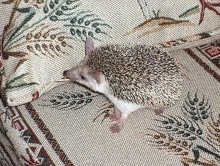
Hedgehogs are pretty, exotic, neurotic, fetishistic, sociable when they want to be, and very funny, usually when they don’t want to be. Everyone loves a good hedgehog story.

Beauty is very much a subjective thing, of course, but the perception of beauty is often shared, and we may be happy to learn of and understand the beauty that others have seen. If it is not found to be shared, it can come to be shared, and that sharing is a pleasure in itself.

There is beauty in mathematics, and perhaps one of the things that makes a mathematician is the ability to recognise that beauty. There is a beauty in music which I think is only truly appreciated by musicians. There is a beauty in almost every aspect of the world and of human existence which some of us can recognise and be inspired by. The arrival of spring reveals a great deal of hidden beauty in the world which in turn shows up as greater beauty in our soul (or spirit). It is quite possible that a conscious, intelligent being could not exist without a concept of beauty. Without it the mere instinct for survival would not be enough to power our will to live. I like to find beauty.

Truth, the third leg of my rather lopsided blogging triangle, is a completely different matter. It is very difficult, perhaps impossible, even to define truth, much less agree on what it is.

There are many ways of presenting the truth, many ways of believing you have arrived at a truth, but in the end it depends very much on the rules applied to the search, and on the context in which they are applied. Pure mathematicians use strict definitions and rigorous logic; it is possible to identify truth and falsehood absolutely, within the universe of concepts to which those rules have been shown to apply coherently. Applied mathematicians wave their hands about. Politicians, men in pubs and bloggers shout, bombast, misdirect, appeal to common sense, mysticism or the intellect of the reader/listener, and more or less make it up as they go along in their attempts to be seen to be right, and to have their pronouncements accorded the accolade of truth.

What was true is suddenly shown to be false. What once was, is not. What was not, now is. We argue about facts when we should be arguing about definitions, we argue about definitions when we should be arguing about facts. We argue about both when we have little or no understanding of either, and ‘the truth’ is often simply the point that I, or the other chap, got bored with the argument.

Despite all of these difficulties, I shall continue to blog about truth, because I think it matters, and the search for it is endless fascinating. And I shall continue to blog about beauty and hedgehogs because they make life more fun. And I shall occasionally talk rubbish, because not even I can be right all the time ;-).

Friday, April 26, 2013

On Nudity

Update: In the comments, Vincent points out that this post is badly in nearly of illustration. Although I am told that it is possible to find pictures of naked women on the Internet, I have added some here to give artistic coherence to the post (Never Knowingly Artistically Incoherent, me).

A Quick Sketch

I have spent a couple of afternoons trying to find a nude to draw. I first looked at Greek statues and eventually decided that there was no actual nude that was what I was looking for. Then today I tried modern photos in diffetent styles. Again I found nothing that wanted me to draw it, but I was struck by the variety of results of applying imagination to the representation of the human form. Not for the first time, I fell to thinking about it all.

The Original
Flesh in Stone, by the Genius of Bernini
There is great beauty in the human body. And great possibility. Despite the great beauty and plasticity of many animals, there is much in the human body that is, or can be, superior to them. One reason is simply the lack of hair, which allows the details of flesh texture and muscle tone and form to be clearly seen even at rest. The ability to be conscious of one's own body, to control its movements in detail, to conceive them with knowledge of how observers will react to them and to present them in a specific context independent of the movements themselves. There is also the important point that the lack of hair allows the play of light and shadow to exist, to be refined and exploited. The animality of the human body is more clearly visible than in other animals.

Naked Flamenco
Then there is the fact that we know and understand the human body, its functions, sensations and responses, far better than those of other animals. And then there is sex. We don't think of want cheetahs sexually.

But sex is not necessarily an important part of this perceived beauty, or even any part of it. I can see beauty in the male as well as the female form. On the other hand, it does appear that the female form is intrinsically more beautiful than the male. Women who appreciate beauty seem to agree with men on this. A beautiful woman is a beautiful thing. A man's beauty cannot so easily be appreciated by other men. Nevertheless, the beauty of the human body is not limited to the female.

Roman, not Greek, but one of the best
Nor is it limited to the young and well-formed. In many kinds of dance the performers tend to be youngish and slimmish, but then many forms of dance are too demanding for the old and fat. Some forms do allow for this. Flamenco rhythms are often danced to by old women. When it is well done, with skill and duende, not only the dancing but the women themselves become beautiful.

I remember a story I once heard about Josemaría Escrivá de Balaguer, in which he cried because he had seen an artist capable of making a chaste Venus. The story was probably apocryphal, carefully crafted to illustrate a point, as so many of the stories he told were, but it means, at the very least, that he thought it could be done, and that it was important.

Looking at pictures of attractive naked women purely- as it were- as beautiful objects, or the subjects of beautiful images, rather than as objects of male enquiry, is very interesting and instructive. The curiosities of anatomy, the signs of life lived and suffered, the differences that exist between what you may think of, at first glance, as similar examples of the Standard Pretty Girl, the ways in which the human body can be twisted, distorted, lit up, perceived, conceived, expressed and impressed. Their is apparently unlimited potential for teh creative mind to find new and beautiful ways to show it to us. I like this fact.

It is possible that that drawing will never be made. These reflections will have to stand in its place.

Sunday, April 7, 2013

Sigüenza

Sigüenza is a city in the north of Guadalajara, on the banks of the Henares.  A strange city.

Guadalajara itself is a strange kind of place. The eponymous provincial capital is the sort of place that no one has ever been to, or comes from, and the province is now a part of the Autonomous Community of Castilla-La Mancha, despite having no historical connection to it. When Spain was carved up into Autonomous Communities with their own parliaments and the rest of it, in the late 70’s, the motivation was to recognise the historical identity of Galicia, Catalonia and the Basque Country. The rest of Spain wasn’t so easy to partition. Andalucia was fairly clear, and so was Valencia, I suppose, but there were lots of areas that didn’t have any obvious boundaries, or that appear to fit anywhere in particular.
 
León was put into Old Castille, Murcia and Cantabria were given their own identity, and no one had any idea what to do with the Alcarria. It would have been ridiculous to make it a community in its own right, Old Castille was quite big enough, and Madrid’s dignity required that it not be lumped in with another area, even though they are more closely linked historically speaking. On the other hand, the Alcarria is defined to a certain extent by not being Madrid. So the least absurd solution turned out to be to put it with Castilla-La Mancha. That, in any case, is what was done.

So I found myself last week in a city of only 3,000 inhabitants with a monumental Gothic Cathedral of a size and grandeur that comes quite a surprise, with a dozen or so side chapels and an impressive structure in the centre bounded by a rectangle of carved stone to the ceiling and panelled with sculpted wood, contained the barred high altar and the facing choir stalls, in the high mediaeval tradition. And this, despite being central to the history of Castille, is politically part of the same Community that I live in, 300 miles to the south.
 
The city/village of Sigënza has a castle on the top of the hill, a walled mass of mediaeval streets jus


t below it, and a complex of rundown Baroque streets nearer the river. It has five churches of varying age and architectural interest, two convents, one of which makes and sells excellent chocolate, and a modern area which is still growing. It also has a railway station because, in the late 19thC, it seemed that it was still a place that mattered.
 
Everything worth seeing there can be seen in a day, and our intention was to spend another couple of days walking in the hills and through the surrounding villages. There are several villages within a few miles, and I do mean villages, where only a few dozen people live, with castles and one with a mediaeval wall 20 feet high, for no apparent reason, as there’s really nothing to protect.

And a river valley with a burbling stream, with spring colours, overhanging rocks and eagles and vultures circling overhead. We were chased by dogs at one point, and if they ever get together with the birds there could be trouble.

A pleasant few days. It rained a bit, in fact it hailed twice, once just after we lost the dogs, but as I say to Mrs Hickory at such times, ‘Rain is a state of mind.’ She doesn’t always look convinced. Anyhow, photos.

Tuesday, March 5, 2013

The Beauty of Sanskrit


Sanskrit is a beautiful language. It is mellifluous, endlessly plastic, elegant in its complexity, and has created possibly the finest collection of narrative poetry in the world. An explanation of the language from two and a half thousand years ago is a work of such analytical and aesthetic wonder that both the erstwhile mathematician and the amateur linguist in me can still hardly believe it is real.

Sir William Jones, a man of great culture and intelligence, famously observed, over two hundred years ago, that Sanskrit is ‘more copious than the Latin, more perfect than the Greek, [and] more exquisitely refined than either.’

Even the script has a specific kind of beauty. Devanagari is a Bhramanic script, approximately alphabetic (of a type known as an abugida, where vowels are indicated by secondary marks rather than the more complete letters than express consonants) and rigorously phonetic, to the point that letters are written differently when the phonetic environment causes the sound that is actually spoken to change. And it isn’t done to make things easier, but to increase the perceived perfection of the form.

The Clay Sanskrit Library is a series of annotated, bilingual Sanskrit-English texts in pocket hardback on the model of the Loeb Greek Library.  A terrific idea and, like the Loeb, very good to have on your shelves and very useful to the learner (which I still am and probably always will be). However…

They decided to publish the English texts in Roman transliteration rather than in Devanagari. They explain their reasons for this: the script originally used to write down the earlier texts is unknown, but it certainly wasn’t Devanagari which was only created centuries later; the Roman is easier to print, and easier to read for those who don’t want to learn a new script; but… Devanagari has beauty. Even if you don’t understand it is has plastic beauty, and when you read it and respond to the way it conveys sound and meaning, there is a beauty in the elegant, coherent way in which it performs its function.

1 स ताां ऩुष्करयण ां गत्वा ऩद्मॊत्ऩरझषाकुराभ याभः सौमभत्रिसहहतॊ ववरराऩाकुरेन्द्रिमः
2 तस्म दृष््वैव ताां हषााद इन्द्रिमाणण चकन्द्पऩये स काभवशभ आऩरनः सौमभत्रिभ इदभ अब्रव त 3 सौमभिे ऩश्म ऩपऩामाः काननां शुबदशानभ मि याजन्द्रत शैराबा दरुभाः समशखया इव
4 भाां तु शॊकामबसांतप्तभ आधमः ऩ डमन्द्रत वै बयतस्म च दुःखेन वैदेह्मा हयणेन च


Compare it to the Roman form, which communicates effectively but is irredeemably ugly.

 1 sa tāṃ puṣkariṇīṃ gatvā padmotpalajhaṣākulām rāmaḥ saumitrisahito vilalāpākulendriyaḥ
2 tasya dṛṣṭvaiva tāṃ harṣād indriyāṇi cakampire sa kāmavaśam āpannaḥ saumitrim idam abravīt
3 saumitre paśya pampāyāḥ kānanaṃ śubhadarśanam yatra rājanti śailābhā drumāḥ saśikharā iva
4 māṃ tu śokābhisaṃtaptam ādhayaḥ pīḍayanti vai bharatasya ca duḥkhena vaidehyā haraṇena ca


Many people learn the Greek script without learning the language, for the pleasure of feeling the sound son their tongue as they read them. I recommend a similar exercise for Sanskrit.

Friday, March 1, 2013

The Beautiful Mechanics of the Body

The Architecture of the Femur.—Koch , by mathematical analysis has “shown that in every part of the femur there is a remarkable adaptation of the inner structure of the bone to the machanical requirements due to the load on the femur-head. The various parts of the femur taken together form a single mechanical structure wonderfully well-adapted for the efficient, economical transmission of the loads from the acetabulum to the tibia; a structure in which every element contributes its modicum of strength in the manner required by theoretical mechanics for maximum efficiency.” “The internal structure is everywhere so formed as to provide in an efficient manner for all the internal stresses which occur due to the load on the femur-head. Throughout the femur, with the load on the femur-head, the bony material is arranged in the paths of the maximum internal stresses, which are thereby resisted with the greatest efficiency, and hence with maximum economy of material.” “The conclusion is inevitable that the inner structure and outer form of the femur are governed by the conditions of maximum stress to which the bone is subjected normally by the preponderant load on the femur-head; that is, by the body weight transmitted to the femur-head through the acetabulum.” “The femur obeys the mechanical laws that govern other elastic bodies under stress; the relation between the computed internal stresses due to the load on the femur-head, and the internal structure of the different portions of the femur is in very close agreement with the theoretical relations that should exist between stress and structure for maximum economy and efficiency; and, therefore, it is believed that the following laws of bone structure have been demonstrated for the femur:   17
  “1. The inner structure and external form of human bone are closely adapted to the mechanical conditions existing at every point in the bone.   18
  “2. The inner architecture of normal bone is determined by definite and exact requirements of mathematical and mechanical laws to produce a maximum of strength with a minimum of material.”

Saturday, February 16, 2013

The Beauty of the Human Body

The Sphenoid Bone as Drawn by Henry Carter
1.      I don't think it counts as found art, because it is clearly art created by a great artist. But it is art whose purpose was not to impress a patron, nor gull some poor alleged philistine, nor to take the mickey, and it wasn't created purely from a desire to demonstrate a technical skill or to give expressive vent to some observation or idea that had taken shape in the artist's mind. It is art that is primarily communication. It was meant to be understood, at least at one particular level. The artist has done his job singularly well, and he had also shown that he is genuinely an artist, not merely a draughtsman. Anyone who has not browsed the engravings from Gray's Anatomy (just about everyone, I imagine) has missed something worth seeing. It may not be true to say that the sphenoid is the most beautiful bone in the human body, but the artist apparently considered it to be, and it shows in his treatment of it.

Saturday, November 17, 2012

Some Curious Facts about the Origin of the Lakes


I have written again and again about the lakes, and I return to them because I keep discovering new things to enjoy and to learn about them. Every summer I find new paths, new hills, new places to enjoy, even new villages which I bring within my range by starting earlier and riding harder.

And then there are the eternal spots on the banks, where the water is at its best, high points on the hills, from which the views are at their most spectacular, the people-less woods filled with croaking frogs, or squirrels jumping from tree to tree, the quiet places that seem to breathe slowly and calmly as though the world did yoga there.


There is always more to discover, and more to learn. And recently I’ve been trying to find out a little more about the geology of the area, because people ask, and I like to have answers.

The whole region is formed from limestone rocks. An awful lot of geology seems to be about calcium, water and carbon dioxide*, in fact:

The geological formations of Ruidera are, chemically speaking, based on the process of precipitation and dissolving of the carbonates (essentialloy calcite). The conditions for precipitating and dissolving of CaCO3 depend on the relatively high level of Calcium Ca2+ and (H2CO3) ions, or of the carbonate (HCO3-) respectively in the water. The dissolution of a calcareous sediment or of limestone in water with a given level of CO2 can be described by the following reactions:
 
·        Ca2+ + HCO3-  --> CaCO3 + H+.                
·        H2O + CO2 --> H2CO3  y CaCO3 + H2CO3 --> Ca2+ + 2HCO3- 
The chemical process of dissolution or precipitation of CaCO3 depends, among other things, on the following factors:    
·       The carbon dioxide (CO2) content. 
·       The pH of the water: A low pH value favours the dissolving of  CaCO3, and vice versa.  
·       Temperature: The dissolution of  CaCO3 in pure water decreases with an increase of temperature. 

It turns out- I finally got round to looking up the history of the area- that the current lakes are only about 10,000 years old. Our ancestors knew only the river, and earlier there were similar formations at higher levels, the remains of which can still be seen rising above the banks in some places. The Cave of Montesinos, which Cervantes riffed on brilliantly in the Quijote, and the Grieta del Toro, were once part of that system, but are now 100m above it.

The most curious thing, it seems to me, is that, while the banks of the lakes are being eroded away by the water**, they are also being created by it. The karstic formations which form the banks and the divisions between the lakes in much of the system are deposited directly by precipitation of the calcium compounds from the water, which is very rich in them, presumably from having come down from the mountains to the east which are made of them. So while the gentle flow is widening and deepening its own channels and basins, it is also building them up around it. Which will win, over time, will, I imagine, depend on the rate of flow and the exact concentrations of minerals and carbonates in the water. History suggests erosion will win.

*My previous experience of geology, derived from walking in the hills with a friend at University who was studying the subject, suggested it was mostly about drinking beer and whacking things with a hammer before laughing maniacally and jotting strange figures on maps. I now realize there is more to it than that.

**Although they are described as lakes, they are part of the river system, and there is a continuous, though usually very gentle, flow throughout the system, enough to coause erosion over time. And karstic rocks are very soft.

Saturday, September 15, 2012

On Hydronyms


The river that flows through the village is called the Alarconcillo. The river we went to to look at the salt mines a few days ago is the Pinilla. They both play a role in feeding the lakes and their two lines join up near the start. A couple of weeks ago I went to a village further south, on the river Cañamares. There is a stream that flows into the lower lakes, called the Magdalena, one of many that appear on the maps in the innumerable little valleys that the crumpled scenery here creates. This one is particular well known because it gives it name to a stretch on hill on the road to somewhere else where a lot of motorcyclists have met an unhappy end. It tempts you to go faster than the curves will allow.

All of this makes for a verdant-sounding countryside filled with the chatter of babbling brooks and the mating calls of happy and abundant fish. But all these rivers are dry. None of them deserves the name of river at all, as they are little more than mud channels baked in the sun. On the occasions when they do have water in them, it is a kind of sludge so narrow you can jump across it.


The city I live in is on the Guadiana, which at least is a proper river you can get wet in. It flows north-east, through Mérida and Badajoz, then goes south, forming the border between Spain and Portugal for about 70 miles and flowing into the Atlantic at Ayamonte. The name is Arabic and it somehow manages to keep its identity for several hundred miles, despite joining with many other rivers and passing through complex multi-feed drainage systems.

You would expect most people to call the river that waters their town or village ‘The River’. Why would you need a name for it at all? ‘And even if you did, to distinguish it from some other river that passed nearby, perhaps, why would the people in the village a few miles downstream give it the same name? There comes a point where the distance is so great, and it needn’t be more than a dozen or so miles, that it is not even recognised as the same river.

People identify their local river with some divinity, or event, or specific feature that characterises it, because they like giving an identity to the important things in their lives. Geographers give themselves the task of tracing rivers, then they need to define criteria for choosing names and deciding which has precedence, so the idea that a river has an identity over hundreds of miles is an invention of modern academia.

A neat explanation, if I do say so myself, but unfortunately it isn’t true. Hydronyms, and to a certain extent toponyms more generally, are extraordinarily durable. They are handed down from tribe to tribe, from conquered to conquerors, from those who left to go West to those who moved in to replace them. Most of the place and river names of Greece are not Greek. They have survived not only three thousand years of Greek culture, the Turkish conquest/semi-replacement of the 17thC, but they even survived the original occupation of the land we know as Greece by those who came from the East and displaced those who gave them those names.

There are countless river names in Spain that are Arabic, Visigothic or Celtic in origin. Why do people who share no language or cultural identity with the namers, nor any real cultural continuity, continue to use names that mean nothing to them?

Names are sounds. The meaning of the sounds is less important than the symbolism of the thing we attach them to. I am certain there is a great deal of information about human history in the human mind contained in the way we preserve and re-interpret names that have become meaningless, but try as I might, I can't find it.

Wednesday, July 25, 2012

More Notes from the Road: Santillana del Mar


One of the great pleasures of the road is to arrive at a village on foot. You see it first at a greater or lesser distance depending on the terrain, and then you have reference to act as a form of target. You move towards it, as directly as the path will allow you, you begin to make out the spire of the church, the larger houses, the way it is set into the hills around it, the colours of the walls and roofs, the feel of the place, you begin to sense the activity that goes on there, and then to smell it, too, be it cows, fish, industry, machinery, powdered earth or humanity. Then you are in it, you have a look at anything that seems worth it, you stop for a drink or a bite, you take a few pictures, exchange a few words, and you set out again, leaving it behind as the road takes you onward. The road (the path, the track, it’s all one) dictates your movements. You go where it goes. On the road you move through places that those who live there think of as fixed. To them they are the centre of the world, at least for a time, but to the caminante it is the village that moves around him, through him, past him. It was before you, now it’s behind you, another spot on the horizon, another reason for wandering. One of the best places you can arrive at on foot is Santillana del Mar.* If you approach from the coast along the clifftops, which is the best way to do it, you climb into the hills, pass through Arroyo, an olde worlde collection of houses in a little dip with a stream running by (this time the name is quite true) you walk past the Japanese girls with blisters sprawled on the side of the road (I mention this because they’re probably still there; neither of them looked as though they would ever move again), and suddenly you look down on Santillana. Santillana is almost entirely mediaeval; the central part, which is most of it, consists of 15-16thC wood and stone houses, and cobbled streets, beautifully kept and with few modern intrusions. Cars don’t enter, many of the houses are used as shops and cafés, and the whole effect is of going back to a place from another time, not a museum, a real place that lives and breathes, but without the smell and the hunger. That’s what you see as you approach Santillana from above, an expanse of brown and black buildings, many like small palaces, the Colegiata, a kind of monastery, another church and cloister, and streets of more modest houses, all looking bright and charming, and on the edge, smallholdings in which cows of the same brown colour chew grass philosophically, all of this set in the beautiful hills of the Cantabrian coast. It’s worth pausing a moment to enjoy all of this before you enter the town. And that’s why I travel on foot. *It’s known as the town of the three lies because it is neither holy nor flat nor by the sea (which is what the name would suggest). It would be possible to argue that none of them is strictly false but in any case the place is named for St Juliana of the Sea, who did something Godly several centuries ago and is therefore now buried in a rather nice mediaeval church in the town, the Colegiata.

Sunday, March 18, 2012

Spring


We measure out our lives in innumerable ways. Landmarks are all around us, waiting to be used for the purpose of telling us we are a little bit older. We struggle through time, and frequently we must cling for rest to a Friday night, a Christmas Day, the first swallow of spring, the first and last leaves of autumn, the sun going down behind the hills or the houses across the street, an equinox, a solstice, another birthday, another beer.

Spring is short here. Winter turns into summer over the course of a couple of weeks. Around the beginning of March, each year, you suddenly notice that you aren’t wearing your coat, then a few days later you’ve put your sweaters away as well. Before long we will be looking for the shade when we go outdoors. There isn’t a real autumn either, but summer has a long, long tail which we call autumn until some time in November.

So there is no spring, and yet we clearly distinguish the start of spring. Several things happen at once, some public, some private. The weather changes, as I said, and with it comes a tangible sense of openness and cheerfulness. People immediately appear outside bars as though by magic, as if they had emerged from hibernation. The square is full at ‘cañas’ time, and the pavements are no longer for walking quickly along with your coat buttoned up but for standing on and talking to friends on at the window of your favourite bar.

The water birds reappear on the river and start to breed. I saw the first lamb a couple of weeks ago. Soon the days will become longer than the nights and the clocks will go forward, but, symbolic as these things are, they arrive rather late to mark spring here. We’re already there.

Today was the last day of the ski-jumping season, and the first of the Formula 1 season. Such things as these divide summer from winter for me. If you’re watching Daiki Ito it’s winter, if you’re watching Fernando Alonso it’s summer. One thing ends and another begins. So, adding all these things together, I decree that for me, spring has arrived, and that means summer is nearly here.

Friday, March 9, 2012

God


Arguing about God on Internet forums is a largely pointless activity, guaranteed to lead to annoyance and frustration, and one I don’t usually dabble in. But the other day I got caught up in such a discussion over at Longrider’s blog. I made the mistake of trying to make two points at once, or rather, one observation which I didn’t expect to be contentious as the lead-in to another which was no more than a question, though a difficult one to express, and to understand.

There were two commenters who attempted to engage. The first did so intelligently, but he didn’t quite seem to grasp the point of what I was asking, and in any case he retired early on the not unreasonable grounds that he’d had this sort of argument before and they never got anywhere. I intend to follow his example after this post. The second was a weird creature who interlaced references to irrelevant people and concepts with random abuse in block capitals. Both signs of a less than towering intellect, so that wasn’t going very far either. Then our host on the blog stepped in and asked us politely to return to the topic, from which we had strayed to some extent. Politely, we obliged.

The observation I made, which I thought uncontentious, was that Richard Dawkins is a militant atheist. He is frequently bombastic, importunate and rude, dragging the stupidity of believers into places it wasn’t invited. Although he has a sharp intellect and an extensive knowledge of his field, which is itself broad, not everything he says in defence of his beliefs is filtered through that intellect. Some of it much more primal. It seems to me a perfectly reasonable use of the word militant. Not only that, but a criticism of his dialectic style was given in the original post, albeit tangentially, and I originally commented to defend him from a misconception that had arisen.
The question I asked was, in essence, the following:

The idea that there exists, or should exist, some power, creative, guiding, saving, explaining, is present in the human mind. This idea usually conceives, implicitly or explicitly, that this power is outside the mind itself. At the very least, almost everyone seeks some kind of moral order, both personal and social, and recognises that it is good that there should be such a thing. Most people seek, or imagine, something more than that, that there life has meaning, and not uncommonly, that that meaning, that purpose, that moral order, is created, or actively imposed, from outside man.

This is not an invention of ‘organised religion’; the fact that large and powerful organizations can exist which take advantage of it merely proves how important that perception is to us.

This is why it is important to explore the question, because ‘god’ undoubtedly exists in the human mind, and is an important part of what we are. Where, then, does it come from? Is it a product of the way the human mind is constructed, does it arise within the mind, as a result, perhaps, of our ability to recognise and reflect on our mortality, but not to understand it or to change it? Is it just a by-product of what we are?

It’s quite possible that one day it can be fully explained through a much more complete understanding of the nature of the mind and the genetics behind it. Not explained away, or some plausible story constructed, but actually explained, by identifying the physiological mechanism that brings it into being. But not yet. We are a very, very long way from being able to explain it properly.

There is another possibility, that it actually does reflect something outside ourselves, that thing we sometimes call god.

The question I asked was, has Richard Dawkins given a convincing explanation of why this last hypothesis is the least parsimonious?

I could have put it in other ways. Has he proved to his own intellectual satisfaction that this last possibility is not true? It isn’t quite the same question, though it’s close enough, and I wish I had asked it that way, because although the question is difficult to frame, there is in fact a simple answer: no, he hasn’t.

His book, The God Delusion, is an attempt to address precisely the question I asked, as I originally asked it. He sets out to consider what causes the sense of a greater, guiding power to arise within mankind, and to take such an important personal and social role, and he considers the possibility, naturally enough, that it could be because there is something outside us which has placed knowledge of itself within us, or that we are capable of identifying. Does he show, at least to his own satisfaction, that it can’t be true? In fact he doesn’t, not completely, and he recognises this fact, although he does conclude that it is very unlikely indeed.

In the first draft of this post I wrote that I imagined Dawkins, privately, to be completely convinced of his position, despite the minimal reservation he expresses in the book. But, oddly enough, right on cue, comes this debate, in which he states his position as that of an agnostic, almost but not quite convinced intellectually that there is no sentient creator, but unable to rule it out entirely. The last little bit is belief. It reveals a greater intellectual honesty than I have seen him bring to these discussions before, and is precisely what I was wondering about. Those who claim that ‘Dawkins has proved there is no god’, are talking through their hats, and have themselves failed to understand his arguments and where they lead.

He rejects any attempt to consider god as an old boy on a cloud with a beard and a set of scales, or any variation thereof, because once you posit an omnipotent being that can arbitrarily change reality or our perception of it, it all comes down to how much that being wants to be noticed. Human reason cannot detect such a being. It isn’t the only concept that can be, or has been, posited, that is more or less defined to in such a way as to lie outside the scope of our reason, but it is probably the only one that actually matters. Some people find the idea obviously preposterous, others feel they have actually experienced him. But there’s no point arguing about it intellectually.

He doesn’t consider the god of the creationists either because it isn’t worth arguing about. Creationism is not an intellectual position, it’s just a belief, and one which, unlike the old man on the cloud, is now easily refutable by observation, at least to the extent that it attempts to justify itself by reason.

The god of most believers is not accessible to scientific enquiry and genuinely curious atheists/agnostics know this. The moral systems derived from those beliefs are a matter of debate, ultimately inconclusive and often circular, but productive nonetheless, and necessary. The concepts and limits of right and wrong are defined and redefined constantly by a continuous social negotiation, and if you don’t contribute others will decide what you should and shouldn’t do (even more than they do now). Insofar as the actions of believers have consequences for other people they will be judged in the same way as actions derived from any other source of will or motivation.

Arthur C. Clarke postulated the existence of a china teapot orbiting the moon. The details don’t matter much, the point was to show that there are intrinsically implausible things, things that are almost certain not to exist, but whose non-existence we cannot directly prove. But the difference between the teapot and god is that it is not in the nature of man to imagine there to be a teapot orbiting the moon, or to make spontaneous psychological investment in the existence of that teapot. Clarke’s teapot doesn’t matter to us. God does. We would really like to know whether he is out there, what he is, and what we need to do about it. And as yet, although many people have answered the question to their own psychological satisfaction, and many have not, intellectually there is still no completely definitive answer.

The purpose of this post was to explain the question I’m trying to ask. Inevitably (because I’m me) I have ended up rambling about other things which seemed relevant or appeared to shed some light, but the post is intended as an intellectual enquiry, not a defence of any theological position.