We have been at our little country hideaway for a long weekend. It's been a very wet winter and spring and when it rains a lot in the mountains the water table rises, the lakes fill to the brim and where one becomes another the jumps between them are now looking like this. The bike and I have seen a lot of tracks and a lot of water this weekend, and it's been very pleasant.Tuesday, June 11, 2013
Water
We have been at our little country hideaway for a long weekend. It's been a very wet winter and spring and when it rains a lot in the mountains the water table rises, the lakes fill to the brim and where one becomes another the jumps between them are now looking like this. The bike and I have seen a lot of tracks and a lot of water this weekend, and it's been very pleasant.Sunday, June 9, 2013
The Grass Ain't All That's Blue in Kentucky
To judge the truth or falsehood of this statement requires
the construction of a series of contexts in which it is possible to understand
the words and the ideas expressed by their composition to have meaning about
which argument may proceed.
On the face of it, and interpreted with a minimum of
real-world knowledge, without which no context can be sufficiently
reconstructed, the statement affirms that there is something in (the state of)
Kentucky which predominantly reflects electromagnetic radiation in the
wavelength range ~450-495nm. This much can easily be shown to be true, but the
truth of the full statement is contingent on the grass in that state also
having that property, and this is rather more problematic. It is reasonable to
assume that the reference is to Poa pratensis, but even this specific grass is
not in fact blue. The seedpod passes through a blue stage as it matures, but,
unlike flowers, grasses are characterized by the enduring hue of the stalk, not
by a moment in the life of a small part of themselves.
The line is the title of a song and it is necessary that it
be true in some sense, or the song would be meaningless, worthless. Let us
postulate that the song is not in fact worthless, that there is truth in this
statement, and try to uncover the type of truth that lies within it.
Truth is entirely context-dependent, because meaning is
entirely context-dependent. Much of the difficulty in determining what is true
comes from insufficiently rigorous definition of the context in which the
statement to be assessed is made*. Here we begin to see that the truth of the
implicit and explicit statements in the above sentence must be considered each
in a context of its own. The word ‘blue’, in the absence of any context other
than what it conveys in isolation to a normal speaker of English, suggests a
colour. In this context it would be clearly false to say that the genus Poa is
blue. The grass of Kentucky is, however, nominally associated with the colour
blue, and in the context of socio-cultural symbolism it may clearly be held to
be true that the grass in Kentucky is blue. This is important, because if it
were not so the line would be weakened to the point of meaninglessness. But it
also shows that acceptance of the statement as true depends on our placing it
in a context quite different, scarcely even intersecting, from the original
context in which placed the term blue.
The Kentucky reference suggests that it is a country song,
and is therefore, about some guy getting drunk because his girl has left him.
Suddenly we are making considerable progress, because this leads us to the idea
that the other thing in Kentucky which is, in the context of human emotion as
expressed in fireside slang, blue, is the singer himself. This can be
established beyond doubt by listening to the song, and it will be found to be
true. It also gives the line a dramatic interest which the mere affirmation of
the existence of blue doors, cars, trousers or lawnmowers in that beautiful
part of the world could not possibly have. But note that there is no overlap
whatsoever between the contexts in which it is necessary to understand the use
of the term ‘blue’ in order to attribute the quality of truth to the original
statement.
I conclude, therefore, that the proposition is demonstrably
true, and that the non-intersecting contexts in which the parts of the
proposition must be interpreted are contained within it, at least when it is
read by the kind of person for whom it was intended. So not only truth, but
successful communication.
*"You don’t love me anymore, you’re seeing that blonde at
number 27." "My darling, I cannot answer this accusation, you are insufficiently
rigorous in defining the epistemological context of your remarks."
Sunday, May 12, 2013
On the Need, or not, for Public Education, and Other Related Matters (Because I Can't Stick to the Point)
When people say they want public education, what do they
mean?
I want good education, as cheaply as possible. I don’t care
how it is done. Why would you?
When you talk to people about this, you often find that it
is public education, more than good and available education, which is taken as
the final end.
(This is not only true of education. The local governments
of Madrid and Castilla-La Mancha have recently been trying to privatize the
management of some hospitals. This is not, on the face of it, an ideological
plan, but one that stems from the desperate need to make the available money go
further. Administration costs are recognised as being far too high. Why not
attempt something that might allow more money to be spent on looking after sick
people? If it doesn’t work, we can go back to the old ways, but surely it is
worth trying. Nevertheless there have, predictably, been massive protests, even
before anything has been done.
Similarly, Brett
Hetherington wrote a while back about a plan to privatise the water supply
of a town in Catalonia, which has been rejected by the people of the town. Ok,
fair enough, local democracy at work. But it isn’t necessarily the right
decision. What is wanted, surely, is a cheap and reliable supply of water. It
doesn’t have to be done by politicians.)
It is broadly accepted that everyone should contribute a
smaller or greater amount so that all children can have access to education.
There are few wealthy people or higher earners who would argue that poor children
should be left illiterate and unable to offer anything useful in exchange for a
living. They didn’t when education was not fully socialized and I don’t believe
this has changed. By ensuring that all children have the opportunity to get
education governments are genuinely acting as the agents of the public will.
However, there is no particular reason, as I have said, why
they should have exclusive control over every aspect of education, including
the education of those who do not need to depend on the government, or who do
not want the education it provides?
The schools I worked at in my previous existence as a high
school teacher were private. My current teaching avatar receives homage at a
‘concertado’ school, that is, one that was independently created, was strictly
private for many years, and is now privately managed but to a certain extent
publicly funded, and open to all those who want to go there via a selection
process not controlled by the school. It is economically efficient (so I
understand, relative to state schools) and academically and humanly successful.
It does what it is supposed to do, what people want it to do. Why does it
matter that it does some things its own way?
Surely it doesn’t.
Much of
what happens at school has the purpose of creating a disciplined, respectful
atmosphere. If the place were not full of people who don't want to be there
this would not be necessary and time and energy could be properly devoted to
helping the people who want to learn, to learn.
Even in this school there is much that must be done
according to the government’s rules, and much that is done as it is because,
that’s the way you do things, isn’t it? The classes are long and dull, full of
quite unnecessary information and skills, a huge amount of the children’s time
is wasted, enormous effort is put into creating systems for instilling and
enforcing order, discipline and mutual respect. It is a fine system, well
conceived and well run, functioning smoothly and without fuss, reacting calmly
to push down every nail that attempts to stand out. It makes life better for
everyone involved that these systems exist and are very well oiled, but they
are only necessary because of the essential nature of education is
misconceived. They are a very good solution, but to a problem that should not
exist.
In almost every class there are children who do not want to
be there, or who should not be there. If they were not forced to be there, and
we were not forced to waste time pretending that they will ever learn anything
useful, life would be much better for the rest, and their education much more
productive.
In any
case, if exams are the focus of everything there is no need to bring children
together forcibly. There is little point even having classes. Tell them what to
study and where to find it and then make yourself available to those who have
questions. Surely it really is that simple.
In
systems where exams are not the only thing that matters there is still little
reason to force children to be in classrooms where they don’t want to be. The
idea of education as an advantage and a privilege has been so completely lost
that we think it perfectly reasonable to force children to accept that
privilege against their will, and the idea that parents might not be able to
have their children locked up and guarded 7 hours a day by other people is
utterly mystifying to many.
Wednesday, May 8, 2013
Modernist Hickory
I don't know what this photograph is about, if it's supposed to be about anything, but the image of a hedgehog blowing up a balloon on the street is curious.
It was taken/constructed/conceived by Slava Beilin, an Israeli photographer, apparently in Jerusalem. The monochoming of everything but the red balloon is a fairly common technique in cityscapes, though the subject matter is usually more monumental, important or just bigger. If you look closely, the street behind is reflected in the balloon, and is in colour. It looks liek a bright, sunny day in Jerusalem.
Monday, May 6, 2013
On the Need to Annoy Politicians
It
is very important that politicians should not live comfortably. Those who would
take our money and our liberty must be constantly reminded that these things
are ours, and not theirs. I do not advocate violence, of course, at least not
in democracy, but turning up in a group in public places, to annoy them, bother
them, discomfit them, remind them that they are supposed to work for us, and
that their power is ours, delegated to them for specific purposes, and that
they answer to us, is necessary. They must not be allowed to forget it. It
doesn't matter whether you agree with whatever the protest is about, or with
the exact motivation of those carrying out 'escrache', 'acoso', recently in the
name of those who haven't paid their mortgages, but as long as their behaviour
remains within certain bounds, we should applaud them, for they are carrying
out the vitally important act of making our rulers' lives more uncomfortable.
The
same applies, to a certain extent, to civil servants also. I will recognise
that there is a considerable difference of degree, since they are, on the
whole, simply trying to make a living like the rest of us and happen to have
found that particular path. Some of them are even useful to us, rather than to
the government.
But
having acknowledged these points, they are people who have chosen to work for
the government,* which pays them with our money. They do not answer to us, they
answer to other people like themselves, and we have almost no power boycott
them, as we would a professional or company who hadn’t served us well, or we
simply didn’t need. We have nowhere else to go. Whether we want to use them or
not, whether they are necessary to the public that pays them or not, whether they
are competent at what they do or not, they are paid by us, but they do not
serve us. None of them create employment. Very few of them are directly
productive. Most do not even contribute, very indirectly, to the growth of the
economy. They pay no tax, of course, they are a great financial burden to us
and most of those who are useful to us rather to those who make and enforce the
rules perform their functions in a very inefficient way because of the
structure and regulation of their organizations.
They
are different from those of us who produce things, are paid voluntarily by
people using their own money, pay tax allow the political employment to exist
in the first place. I do not advocate harassment of civil servants, but I see
no reason why their anomalous position should not be mentioned from time to
time, and kept before the general public and themselves.
*No, I haven’t come over all paranoid. The older I get (the
less young, shall we say), the more I realize that politicians are not doing it
for me, or for you, or for the country or its people. Therefore they should be
encouraged to do as little as possible, and to answer for what they do do.
Nothing should be easy or comfortable for them. Everything I do in my work is
open to the scrutiny and criticism of my employees and my clients, and they
exercise that privilege whenever they think it appropriate to do so. This is,
on the whole, a good thing, and I see no reason why those who pay the
politicians and the government employees should not exercise the same privilege,
with the same benefits for us all.
Etiquetas:
Freedom,
Politics,
Specific Ranting
Saturday, May 4, 2013
An Englishman's Trousers
This morning I went to a gentlemen’s clothes shop I
patronise- because they have no truck with fashion, they just have good clothes that
are always the same, I choose a colour and that’s that- to have the hem of a
pair of trousers taken up. Mrs Hickory had given them to me some time ago and
they had been forgotten in the wardrobe before I had had a chance to do it. I
decided it was time to make them wearable. So I tucked them under my arm and strode forth.
It was a fine day, the sun was shining, children were playing, fresh-faced, full of energy, cats were lying in the shade and lizards in the sun. None of which is especially relevant, but it gives you an idea of how it felt to be preparing for a meeting with the tailor.
"Morning", I said. "Morning, Mr Hickory", they said. This is a small
place and I buy a lot of trousers.
"Trousers",
I said. "I have these trousers... I have some trousers... I thought I'd look for some trousers..."
The sentence was less lucid than it might have been because somewhere
in the middle of it I realized that the trousers in question were
not in the bag in my hand, and neither was the bag. I later discovered they
were both still at home on the chair by the door where I had put them so as not
to forget them. For the moment, all I knew was that they were not in my hand.
I
couldn't admit this, of course. To say, 'Sorry, I've made a mistake. I'll be
back later', was, for some reason, beyond me at that moment. So with the word
'trousers' on my mind, and on my lips, repeatedly, I asked to see some. For
half an hour I discussed trousers, tried on trousers, approved trousers,
criticized trousers both constructively and otherwise, chatted idly of the past
and present of trousers and the trends for a gentleman' summer wardrobe, before
I finally had the presence of mind to say that I had better consult my wife,
and left.
Now I am wondering whether, when I go back tomorrow, whether I shall have to buy the trousers we discussed today, or if I can successfully make a good excuse. I think I can swing it, but it will depend on how the conversation turns. In any case, a good pair of trousers never goes to waste.
Some good has come of it, however. It proves that, despite living the life of a Spaniard, looking and sounding like a Spaniard, in many ways thinking, feeling and remembering like a Spaniard, deep within me there still beats the heart of an Englishman, for surely, only an Englishman could be that absurd.
Now I am wondering whether, when I go back tomorrow, whether I shall have to buy the trousers we discussed today, or if I can successfully make a good excuse. I think I can swing it, but it will depend on how the conversation turns. In any case, a good pair of trousers never goes to waste.
Some good has come of it, however. It proves that, despite living the life of a Spaniard, looking and sounding like a Spaniard, in many ways thinking, feeling and remembering like a Spaniard, deep within me there still beats the heart of an Englishman, for surely, only an Englishman could be that absurd.
Etiquetas:
Life and How She is Lived,
Strangeness
Thursday, May 2, 2013
The Spring and Blogging
The original subtitle of this blog was ‘When I work out what
this blog is about, I’ll let you know’. It was intended to express the truth
about the state of my intentions, but it was only a filler that I expected to
change quickly. In fact it stayed there for more than two years. Well, that’s
blogging, I suppose. You never really know where it will take you.
But I did change it eventually, and now this little
experiment in talking to myself is subtitled as you can see above. It not only
reflects the current state of my intentions, it is also slightly more
informative for the reader who stumbles across it. An improvement, then.
But is it really true that this what I want to limit myself
to? Do I need to feel bound by it?
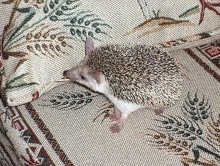
Hedgehogs are pretty, exotic, neurotic, fetishistic,
sociable when they want to be, and very funny, usually when they don’t want to
be. Everyone loves a good hedgehog story.
Beauty is very much a subjective thing, of course, but the
perception of beauty is often shared, and we may be happy to learn of and
understand the beauty that others have seen. If it is not found to be shared,
it can come to be shared, and that sharing is a pleasure in itself.
There is beauty in mathematics, and perhaps one of the
things that makes a mathematician is the ability to recognise that beauty. There
is a beauty in music which I think is only truly appreciated by musicians.
There is a beauty in almost every aspect of the world and of human existence which
some of us can recognise and be inspired by. The arrival of spring reveals a
great deal of hidden beauty in the world which in turn shows up as greater
beauty in our soul (or spirit). It is quite possible that a conscious,
intelligent being could not exist without a concept of beauty. Without it the
mere instinct for survival would not be enough to power our will to live. I
like to find beauty.
Truth, the third leg of my rather lopsided blogging
triangle, is a completely different matter. It is very difficult, perhaps
impossible, even to define truth, much less agree on what it is.
There are many ways of presenting the truth, many ways of believing
you have arrived at a truth, but in the end it depends very much on the rules
applied to the search, and on the context in which they are applied. Pure
mathematicians use strict definitions and rigorous logic; it is possible to
identify truth and falsehood absolutely, within the universe of concepts to
which those rules have been shown to apply coherently. Applied mathematicians
wave their hands about. Politicians, men in pubs and bloggers shout, bombast,
misdirect, appeal to common sense, mysticism or the intellect of the
reader/listener, and more or less make it up as they go along in their attempts
to be seen to be right, and to have their pronouncements accorded the accolade
of truth.
What was true is suddenly shown to be false. What once was,
is not. What was not, now is. We argue about facts when we should be arguing
about definitions, we argue about definitions when we should be arguing about
facts. We argue about both when we have little or no understanding of either,
and ‘the truth’ is often simply the point that I, or the other chap, got bored
with the argument.
Despite all of these difficulties, I shall continue to blog
about truth, because I think it matters, and the search for it is endless
fascinating. And I shall continue to blog about beauty and hedgehogs because
they make life more fun. And I shall occasionally talk rubbish, because not
even I can be right all the time ;-).
Etiquetas:
Beauty,
Blogging,
Hedgehogs,
The Hickory Wind
Subscribe to:
Posts (Atom)