Saturday, September 4, 2010

Education and David Willets

It appears that David Willets, a well-educated man who is generally held to be intelligent, has said that universities should mentally knock a few points off the exam results of middle class applicants, in some kind of levelling exercise to get (yet) more state school pupils doing degrees. He talks about ‘balance’, and picking students on ‘potential’ rather than ‘performance’. He doesn’t use the expression ‘social justice’, though he might as well. He is, of course, talking nonsense, but then, he is a politician, a member of a highly unstable government that isn’t at all certain that it has real support among the electorate. (The electorate isn’t too sure, either).

Good universities did choose students on a variety of criteria, including what Willets presumably means by potential, as much as on exam results. They held interviews and entrance exams which were intended to tell them much more than what A Level results alone could. Then they made specific, personal offers of places to students. They were more or less prevented from doing this by Labour governments who thought it benefitted the wrong sort of people. Now we have a government that wants them to start doing it again, but only if it benefits the right people, who are, broadly speaking, the sort of people whose votes they can’t count on but think they might win over. Why is he wrong?

Is it a good thing that all those capable of getting a degree in a serious academic subject, and thus increasing their options in life and having a chance of being more successful, which in turn will be good for the country as a whole, should not be prevented from doing so by their parents’ lack of money? Most certainly it is. You don’t have to be a socialist to recognise that.

But reducing inequality by shooting the rich doesn’t work. As Willets obviously realizes, state education is, in general, very poor. There is much variation, and some good schools but large numbers of children in Britain with the potential to do well have to more or less educate themselves as best they can, forced as they are to put up with classmates who don’t want to learn, teachers who can’t teach and an education system that structured and operated for the benefit of politicians and trade unions rather than for the children (or the taxpayer who foots the bill).

It’s a mess, it leaves millions of children with empty heads and no hope of anything but drudgery or crime and it needs to be completely recreated from scratch. Denying any kind of decent education and opportunity in life to generations of children, deliberately condemning the poor and unfulfilled to remain that way for ever, purely for reasons of ideology, is one of the highest crimes of British socialism against the people it claims to represent. But pretending that young people who do not know things and have not demonstrated a particular competence have in fact done so is not the solution.

And David Willets is well aware of this. He simply wishes to shift the blame onto the universities, which the great majority of people haven’t attended and treat with distrust, and to avoid having to do anything meaningful, which would be difficult or, worse still, ‘brave’.

The whole idea of education needs to be completely dismantled, depoliticised and rebuilt. What it is for, how it should be paid for, what forms it should take, now and in the future, who should do it, and how to deal with the problems caused by people who don’t want it.

To be continued...

Tuesday, August 31, 2010

Nimbyism in New York

A lot of people are greatly exercised at the thought of a mosque occupying a part of the site of the old Twin Towers in New York. Most of them don’t seem to have a clue what they’re talking about, and many see Osama Bin Laden behind every bushy beard. It has been pointed out (correctly or not) that the leader of the group is a man of peace and practices ecumenism. The name is not well chosen, smacking of Islamic imperialism, and it is certainly true that it would be seen by many violent thugs around the world as a symbolic victory, but that, I would suggest, is neither here nor there. It’s not relevant to the case.

We have heard infantile suggestions of opening a gay bar opposite said mosque (go ahead, what’s stopping you?) and so on, but the general argument seems to be ‘I disapprove of this, therefore someone must stop it happening.’ It’s Nimbyism, combined with the Guardianista idea that everything really belongs to them.

I don’t know what I’m talking about either, but I offer the following thoughts:

I’m not American and I don’t know anyone who was killed, but the values that were attacked that day were mine too. And those values aren’t just vague ideals espoused to help me feel good about myself; they are what allows me, and hundreds of millions of other lucky people, to live a free and prosperous existence. They are worth defending, not for abstract motives of rightness, but because the fact that our lives are worth living depends upon them.

It seems to me that, deeply and viscerally symbolic though that site is to Americans, it doesn’t actually belong to them. It belongs to a group of individuals who, in accordance with the principles of liberty, will dispose of it as they see fit. And if they choose to rent it or sell it to a group of people who will use it to practice their religious faith, that is also fully in accordance with the principles of liberty that we defend. The US Constitution is so beautifully clear, transparent and unambiguous on these points that US governments find it extremely difficult to ignore them, unlike our governments at Westminster and Brussels, who can always wriggle out of anything, even the Magna Carta.*

Behind that visceral sense that the site of the towers is public property is a moral laziness that is very damaging to the freedom that that place has come to represent. If the objectors wish to stop a particular use of the place they have a way to do it, fully compatible with that freedom; they should club together and buy it. There are a lot of them, it wouldn’t cost them much each, and then they could legitimately dispose of the land as they wished. Otherwise, however they feel about it, however strongly, and however rightly, it isn’t up to them (or to Obama).

Incidentally, I wonder if Polly Toynbee and her fellow Guardian columnists have realised that, if the revolution they claim to desire ever comes about, they, as well-fed, privileged agents of a bourgeois state, who do no useful work, would be the first against the wall. Could it be that they know they can spout pretentious claptrap in exchange for large sums of money, confident that their salaries and quality of life are not really in danger? Do they not, in fact, believe what they say?**


*The charter of fundamental rights of the EU is largely meaningless waffle, intended to allow it to be interpreted in any way that may be convenient to the ECJ, the Commission or the national governments. It recognises the right to hold opinions, to free expression and to exchange information and ideas, but in some member countries the expression of certain ideas is explicitly forbidden and punished by law. They simply ignore the charter.

**I don’t have any objection to a private organisation paying anyone what it wants to, but I can challenge their ideas, and the coherence of their position.

Tuesday, August 17, 2010

Tobias Smollett

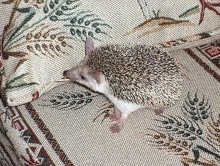
I've just discovered Tobias Smollett. This revelation will doubtless shock regular readers, who will have formed a mental picture of a highly erudite blogging hedgehog, steeped in the classics and au fait with the work of even the most minor figures represented in that great, overarching pantheon of universal literature, even the ones whose heads have, as it were, fallen off the lower shelf where they were stored behind the translators of Senegalese leopard-hunting verse epics and rolled under some dead leaves into a forgotten corner.

The image is getting a bit unwieldy so I'll leave it to collapse under its own weight.

I should have said, of course, that I have rediscovered Smollett. Faux-intellectuals and Guardian columnists always re-read any work they wish to enlighten us about. They would not dream of admitting that, only now, at the age of 29, are they reading, for the first time, well, almost anything, really. But I missed that trick, and now the world knows that Hickory's knowledge of 18thC novels is sadly incomplete. Well, so be it.

Smollett's is one of those names you keep hearing as you buzz about the flame of literary creation, but I had always assumed he was just another of those dull people who thought he could be Defoe and is only remembered because so few novels were written in England at that time anyway. I have had the pleasure of discovering I was utterly mistaken.

I picked up 'The Expedition of Humphrey Clinker' in a cheap second-hand shop and was very glad I did. It's a cracker. It is funny, perceptive, and very polished. It's not at all self-conscious, derivative or imitative and you don't have the sense (which you do a touch with Defoe, and very much so with Sterne, who write the way first-time parents look after their children- not very sure what it's for or what you are supposed to do with it) that you are present at the birth of something. Smollett knows exactly what he's doing with the characters and the plot.

Yes, it's marred by the ludicrous coincidences and enforced happy endings that damaged so much of English writing until George Eliot, Thomas Hardy and dear Emily came along and showed them how it's done, but it is full of humorous observations and asides, and, being written in the form of letters from, to and among a cast of a dozen or so, there is much that we, the reader, knows that is hidden from most, but not all, of the players. The characters are in themselves wonderful creations. A couple of them are, necessarily, little more than narrators, while others manage to turn each letter into a comic masterpiece.

The details you get about life as she was lived in different cities and villages at that time are quite fascinating, and enter and illustrate the narrative vividly and quite naturally. Smollett could not have known what would surprise or instruct the reader a century or so later, but much of what strikes his travellers is so pertinent that you can easily forget he was writing of his own time, and believe he is an unusually gifted professor of history bringing a long-gone period to life.

There's not much point picking out bits and pieces, but his disgust at the water and practices at Bath and Harrowgate is way ahead of its time, as well as being very funny, and among the quite baffling details is the fact that visitors to Bath were traditionally accompanied by groups of French-horn players to advertise their presence.

I can't link to it, for the usual reasons, but the full text is at Gutenberg and it's worth a look.

Sunday, August 15, 2010

Of Rumanians

In the last few years a lot of Rumanians have come to live in Spain, because of the expansion of the EU and because you can live a lot better here than there. Basically they come in two type, about equally represented, as far as I can see- gypsies and workers. The gypsies we could, frankly, do without, as, although some of them add interest and colour and music to a wander about the city, most of them are just another lot of beggars and petty crooks, and we already have plenty of those.

The non-gypsies, though, are recognised as being hard-working, intelligent and honest. They will turn their hand to anything, work very hard, learn very quickly and are open and cheerful. In the city they work as waiters, or bar staff, or shop assistants, or delivery drivers or any one of a number of jobs just above the level of menial. In the country they tend to work as tractor drivers or mechanica and so on, again just above the menial. The truly menial tends to be doen by S Americans, perhaps because they don't tend to have that mental agility which gets the Rumanians ahead.

(These are very general observations, of course, but I wonder if there is some difference in the education of S Americans and Eastern Europeans which might account for this. Although it is perhaps more likely to be a result of what impels people to emigrate from the different regions- in S America the poorest and most desperate try to escape, and in Eastern Europe it is the skilled working class who seek the adventure of a better life and the chance to become someone.)

One thing that strikes me about the Rumanians is tha they seem to love the water. The banks of the single body of water we have where I live always seem to be filled with Rumanians fishing, bathing and picnicing. Likewise here at my summer quarters, where there is much more water, you can find, at any place that gives access, Rumanians fishing. And at the more popular bathing spots, families with tables and chairs and awnings.

So much so, indeed, that the first two people drowned at the lakes this year (doubtless the first of many, if precedent is anything to go by, given the numbers of people who congregate there, and the habit some of them have of jumping into deep water after having lunched rather well, even those who can't swim when they're sober) were Rumanians, including a two-year-old girl whose parents' car rolled into the water with her inside it. Very sad. Integration comes in many forms.

Saturday, August 7, 2010

Village Idiot

To be read in the voice of Peter Cook or John Bird (or do I mean John Fortune?) or someone like that:

I am a village idiot. By far the stupidest person in the place, the one they are all kind to, never bother trying to explain things to you know what I mean. The trouble is I’m not taken seriously as a village idiot. Being so thick you can’t understand what the people around you are saying, you know, the normal lives they lead, should be enough, do we need this drooling at the mouth and speaking in absurd rustic accents that no one else uses, do we need the wild, straggly hair and foolish leer? If I am much stupider than the rest then I am the village idiot. QED. But people say no, they won’t accept it. They bring up the business of the job in the City, they make snide remarks about the First from Cambridge. The trouble is this absolutism that people bring to the debate. You’re not really thick they say, not like the village idiots I remember, now they really were dim, they’d have given their right arm for your brain, but it’s not about I.Q.’s, it’s not about numbers, it’s about difference, you see. Relatively speaking I’m in just the same position.

It’s not like it used to be, it’s true. The place has changed. Fewer farmers these days and rather more Nobel laureates has, I admit, raised the tone of debate in the Aquinas’ Head, but that’s just the point; I could have joined in the chat with no trouble a generation ago, but nothing stays still, and that is what gets forgotten.

Fine people here, very friendly, take a chap as he is, you know. If you’re an idiot they treat you like one. There’s old Freddy Barnes, grows the finest vegetables in the village- I’m very partial to a chalotte, myself- spends his time digging a bit, weeding a bit, sprinkling a bit of manure here and there and he makes enough to live on. Used to have one of these Internet companies, selling, for their weight in gold, as it were, personalised individual methods for sending any other specified Internet company to the wall. Quite brilliant. But it was all too much for his nerves, and he came here to relax and lead the simple life. He says he gets the same buzz from spraying greenfly, and who am I to argue? It’s all above my head.

Then there’s Dravindra Singh, Emeritus Professor of Linguistics at somewhere terribly famous, the one all the other linguisticians went to when they couldn’t work out what the Halibi tribe were trying to express by a rising tone in the fourth declension of the thirteenth variation of the seventh primal grunt. He would listen once and explain it to them almost as though he were talking to me. Remarkable man. Then one day he had a seizure or something, poor chap, not really old, either, and when he recovered they found he could only communicate in fifteenth century Estonian. Bit of a problem really, especially as he runs our Post Office in his spare time. But they brought someone in and gave the whole village evening classes and in a few weeks they were all chatting happily with the Prof in the saloon bar and making jokes in the shop about the fact that the word for paperclip is the same as the word for- well, you know what I mean. Anyhow, problem solved. Except for me of course. They were very good, of course, let me sit in the classes with them as though I was going to learn too, but I couldn’t get past the basics, you know, and all I can say to him is, Hello, How are you, and Look at that dungbeetle trying to shag that dried leaf, and Do you think the sun will come out later, I want to look for leeches, and that sort of thing...

Monday, August 2, 2010

Garden Parties

Another thing that populates the garden at this time of year is dormice. They aren’t really mice at all, belonging to a separate family. These, I think, are Glis glis. They have masked faces and bushy tales and no fear of humans. If you set a trap for them they are likely to wander up and ask you what it’s for, and then go in to see how it works. The reason we sometimes set traps for them is partly to do with their habits if they get inside the house, but in fact has more to do with the hunting instincts of much of the company.

Last night one of these creatures, who we often watch running around the garden at night, up and down trees and along flowerbeds, even up the backs of the chairs we’re sitting on, was seen to have a particular interest in getting in through the kitchen window through the medium of a shutter (the same one the birds nested in a few posts back), probably because the ham was just inside (note to those deploying mousetraps: forget cheese, what all these creatures will sell their grandmothers for is bacon fat).

Brisk debate led to the conclusion that this must be stopped. The subsequent action involved a broom, an airgun and a number of stones, occupied an entertaining 15 minutes or so, and ended with the humiliation of the marksman, a broken window caused by a sister-in-law whose ability to miss several square yards of wooden slats from a distance of some eight feet was really quite remarkable, and a robust, hale and highly amused rodent thanking us all for the workout before going about its business. For the benefit of the X-Box generation, this is known as ‘making your own entertainment.’

About once a month the females come into heat, and for one night the garden is alive with the things, running, climbing, chasing and screeching up, down, over, under, through, along, around and across every object in the place, including ourselves, in pursuit of the more appealing young lady dormice, who, as is the custom among those without a Y-chromosome, like to play hard to get. Presumably, in the end they get got, but it all takes time and provides drama.

Last year, one moonlit night I persuaded Mrs Hickory to take a walk into the woods, to sit for a couple of hours by a clearing with a (man-made) watering-hole, to see what the night-life in the hills was like. For two hours we listened to squeaks, coos, caws, screams, screeches and howls from invisible wildlife, saw a couple of rabbits poke their ears out briefly, and once watched an owl of some description fly low over the open ground before disappearing among the trees.

That was that, so we eventually gave up and returned to the house, where it turned out the dormice were having their monthly party, and the action in the garden was non-stop. We had been at the wrong theatre.

Friday, July 30, 2010

Of Aerial Things

Between the mountains scrub (monte bajo, I don’t think it has an exact name in English. Hill scrub would be another try) the arable land and the lakes we get a lot of different birds here. Apart from the ubiquitous sparrows, a detail of whose life was discussed about three posts back, we also have, just in the garden, magpies and a kind of coloured jay, both of which are considered vermin and treated as such, which doesn’t stop them coming back, hoopoes, which like to strut up and down the path, pigeons, which have a loft in an unused part of the building and are put in the pot from time to time, a type of owl which sits on the chimney pots and twos at night, and the partridges which drop in from the hills. The place is full of partridges, because they are what bring in the money from the hunters. They like to nest at the base of trees in the thick stuff that grows there, or among the corn, which isn’t a good idea because their breeding season coincides with the harvest, and in the scrub. They move about a surprising amount during the day, but take fright easily and head for the dark patches away from the sown fields. They only fly when they absolutely have to, so they run in a rather ungainly fashion while they still think they can get away with it. In fact it’s quite a good idea because they don’t get shot unless they’re in the air, but I doubt they’ve actually worked it all out.

Eagles are common in the mountains. You often hear a pinging noise and look up to see a pair circling high above you, on the lookout for anything small that’s moving on the ground. From time to time they dive down to look more closely, and sometimes reappear with a mouse or some such in their beak. Their circles take them slowly across the country, almost imperceptibly drifting towards the higher hills or the more open land.

As well as eagles sensu strictu there are kites, occasionally seen in great clouds but usually in pairs, and hawks of different types, kestrels, buzzards, hobbies etc. They tend to avoid human company, but sometimes you come upon one rising from a low branch of a tree, or even on the ground under a bush as you walk past, and they lazily spread their wings and take to the air.

At the lakes it’s more waterfowl. Ducks of various kinds, including diving ducks of the thin-headed kind that look like small herons (in other circumstances I’d do some proper research and be a bit more precise, and I’d post photos, too, but hey, it’s summer; this is all about how it feels to lie back and watch them, it’s not a zoology class). Talking of herons there are several types that nest in the rushes all around the borders of the quieter lakes in particular, and some are big and thin and long of wing and neck and body, like grey storks. Languid and spare, they fly with efficient parsimony and reach down into the water at intervals to casually pick up a careless fish.

The air is full of creatures and the sounds they make. To sit back and enjoy the show is too easy and too enjoyable not to do.